
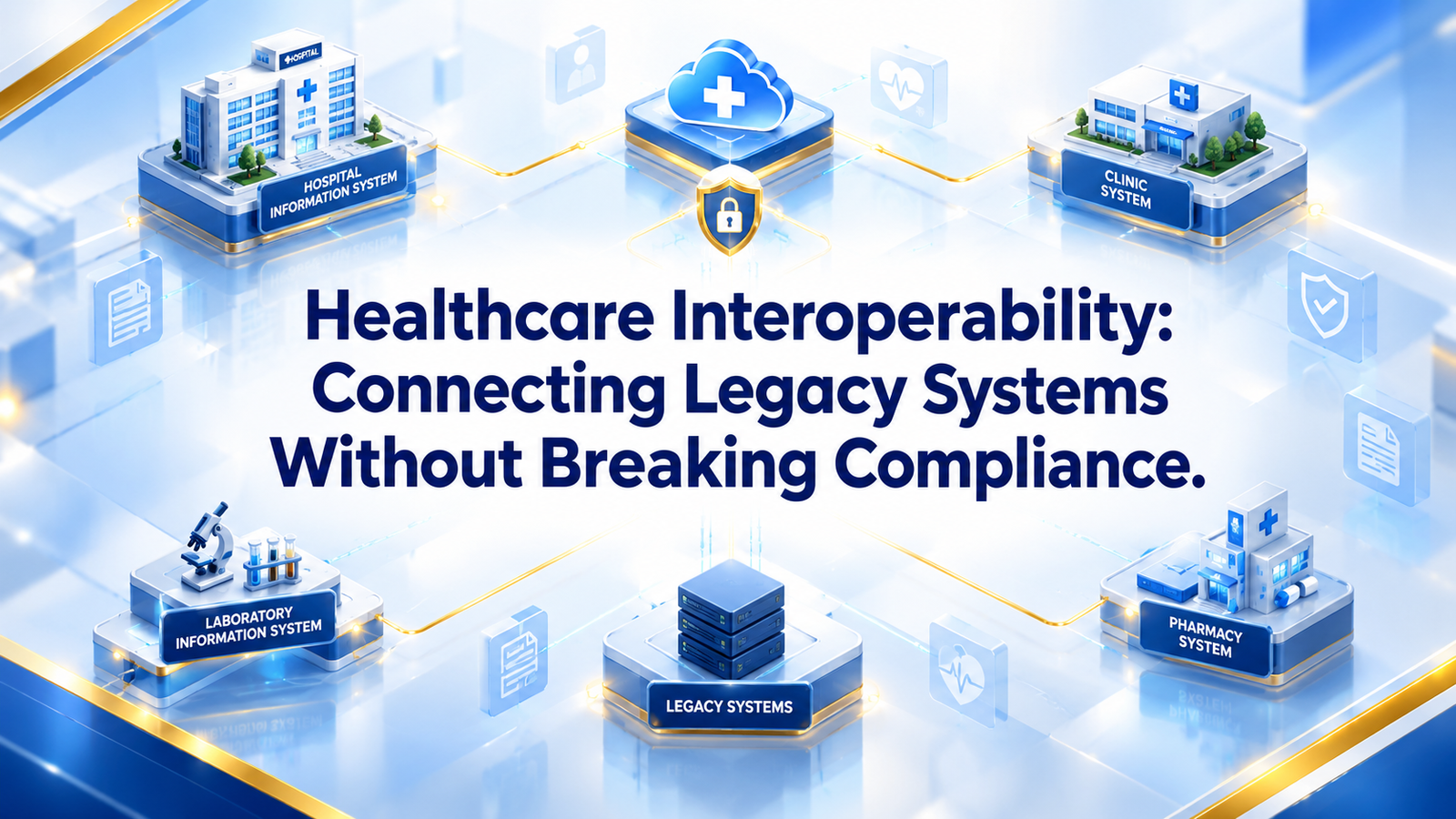
TL;DR: Healthcare interoperability connects legacy systems through standards like FHIR and HL7 and secure APIs, so patient data moves between systems without breaking HIPAA or other compliance rules.
A patient visits a clinic, and the lab and the hospital each hold a different piece of the record. Staff re-enters data by hand, and mistakes slip in. The legacy systems that hold that data also run critical workflows, so nobody wants to touch them.
We help healthcare organizations connect these systems without breaking compliance. In this article, we explain which standards matter and how to protect patient data. We also show how to build an integration layer that grows with you.
Why Legacy Systems Block Healthcare Interoperability
Many hospitals still run electronic health record systems built long before modern APIs existed. These systems store data in proprietary formats, and some speak only older messaging standards. Replacing them costs a lot and carries risk, because clinicians depend on them every shift.
Data silos carry real costs. Clinicians lack the full patient picture, and staff repeat tests and paperwork. Billing teams chase missing information. Our enterprise software solutions help organizations break these silos one workflow at a time.
The Standards That Make Interoperability Work
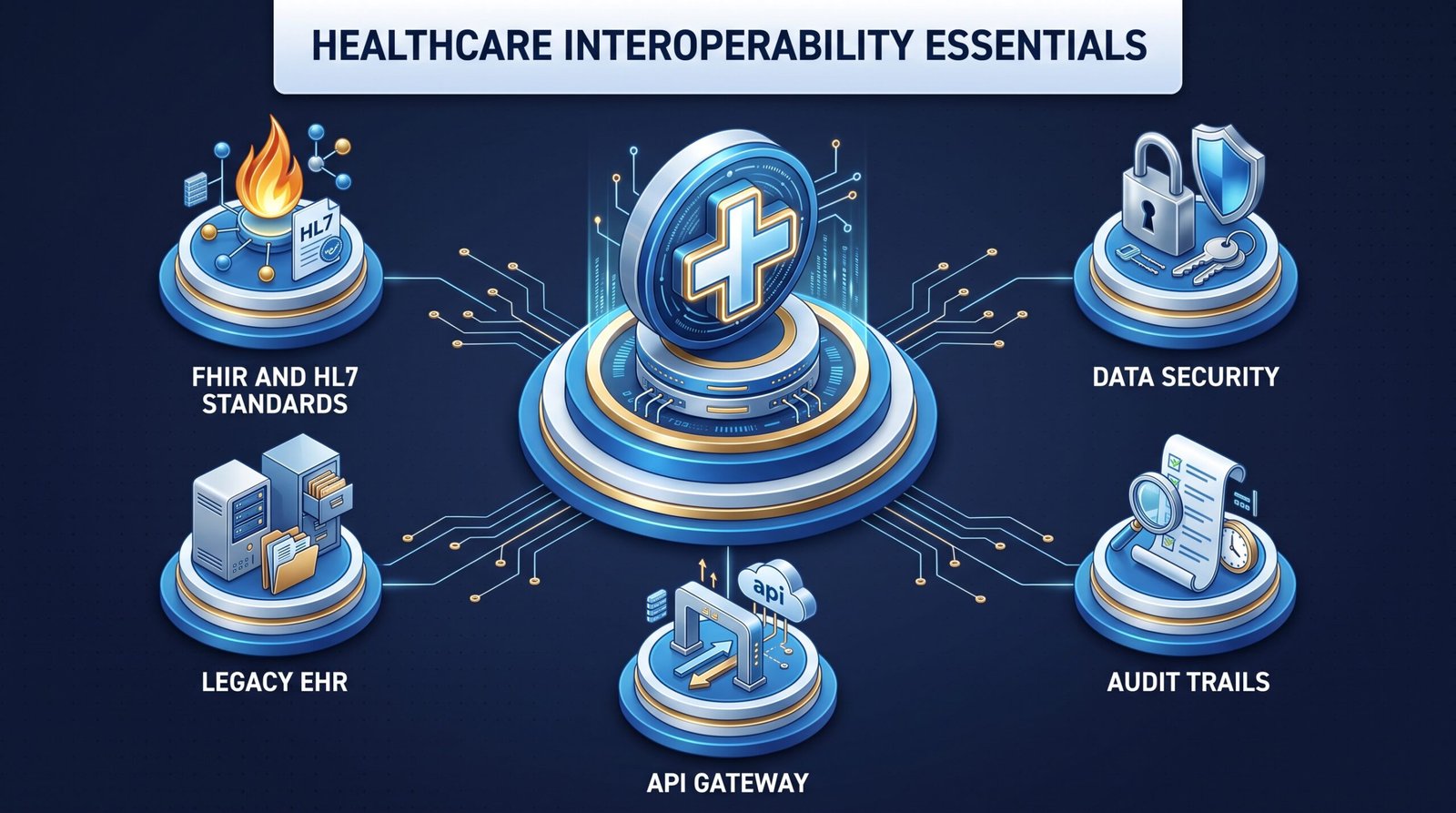
HL7 version 2 messages still move much of the data inside hospitals. They work, but every vendor implements them a little differently. FHIR, short for Fast Healthcare Interoperability Resources, is the newer standard. It uses web APIs and structured resources such as Patient and Observation, which developers can work with easily.
Most organizations need both. We build an integration layer that translates legacy HL7 messages into FHIR resources, so modern apps can read what older systems produce. Our custom software solutions team designs these translation services around your existing vendors.
How to Connect Legacy Systems Without Breaking Compliance
Regulations such as HIPAA in the United States and GDPR in Europe govern how you share patient data. Every integration must enforce patient consent and limit access to the minimum necessary. It must also record who viewed each record. Follow these four steps.
- Map your data flows. Document which systems hold which data and who needs it.
- Put an API gateway in front of legacy systems. The gateway handles authentication and rate limits, so legacy systems never face the internet directly.
- Encrypt data in transit and at rest. Encryption protects records even if someone intercepts traffic or steals a drive.
- Log every access. Audit trails prove compliance and help you investigate incidents. Our cybersecurity services team designs these controls with your compliance officers.
Building an Integration Layer That Scales
Point-to-point connections multiply fast. Ten systems can need dozens of custom links, and each link breaks when a vendor upgrades. An integration layer sits in the middle instead. Each system connects once, and the layer routes and translates messages.
Cloud infrastructure makes the layer easier to scale and monitor. Healthcare workloads still need tight control over where data lives. We design with regional hosting rules and failover in mind through our cloud services.
How to Start a Healthcare Interoperability Project
Start small. Choose one high-value data flow, such as sending lab results from a legacy system to a patient portal. Build it, test it with real clinicians, and measure the time you save. Then move to the next flow.
Involve compliance and clinical staff in the first week. They catch issues that engineers miss. A patient-facing portal also needs thoughtful UX/UI design so patients can understand their data.
FAQ
What is healthcare interoperability?
It is the ability of different health IT systems to exchange data and use it meaningfully. Clinicians then see a complete patient record instead of scattered fragments.
What is the difference between HL7 and FHIR?
HL7 version 2 is an older messaging standard that many hospitals still use inside their walls. FHIR is a newer standard built on web APIs, which makes it easier for modern apps to use.
Can we integrate without replacing our legacy EHR?
Yes. An integration layer and an API gateway let new apps read and write data while the legacy system keeps running.
How do we stay compliant during integration?
Encrypt data, limit access to the minimum necessary, and log every access. Involve your compliance team from the start.
Connect Your Systems. Protect Your Patients.
Healthcare interoperability does not require a risky rip-and-replace project. A standards-based integration layer lets old and new systems share data safely.
Start with one valuable data flow, build compliance controls into it, and expand from there. Clinicians get a fuller picture and patients get safer care.
We would love to help you plan the first integration. Contact Innosaber to start the conversation.
