
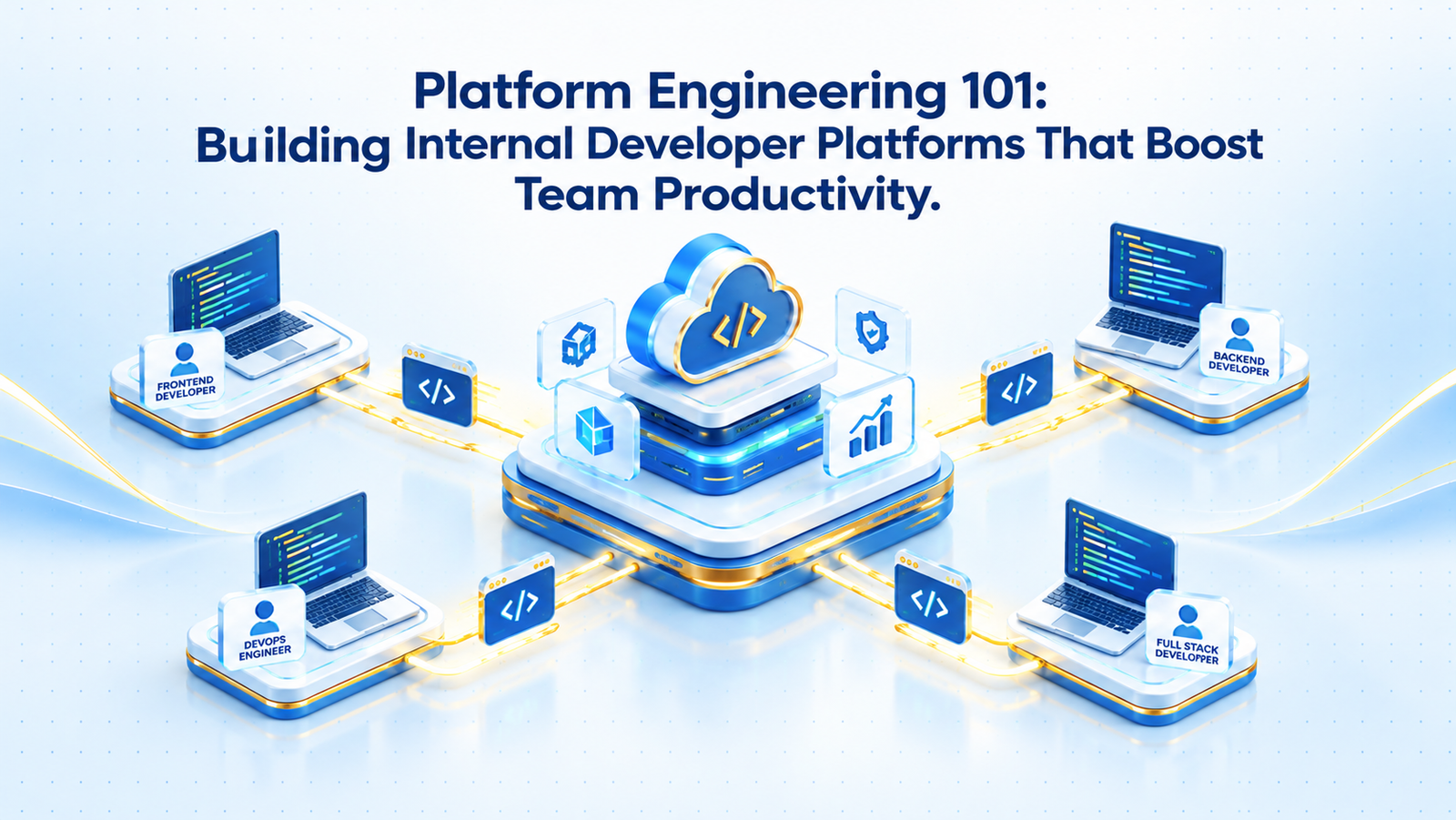
TL;DR: Platform engineering gives developers a self-service internal platform with standard golden paths, so teams ship faster with less friction and fewer tickets.
Developers lose hours every week to work that has nothing to do with your product. They wait for test environments and file tickets for access. They also decode pipeline scripts that a former colleague wrote.
Platform engineering removes that friction. A dedicated team builds an internal developer platform, or IDP, that turns infrastructure into a product developers can use on their own. The practice has moved from a big-tech experiment to a mainstream way of running engineering. This guide explains what an IDP includes and how it lifts productivity. It also shows how to build one that developers actually adopt.
What Platform Engineering Is, and What It Is Not
Platform engineering is the discipline of designing and running the shared tooling and infrastructure that product teams build on. The output is an internal developer platform: a curated set of self-service capabilities that let developers deploy and operate software without waiting on another team.
It does not replace DevOps. DevOps is a culture of shared ownership between development and operations. Platform engineering packages those practices into reusable products. The platform team does not answer tickets all day. It builds paved roads and treats developers as its customers.
That product mindset matters most. A platform that nobody wants to use is just another internal tool nobody maintains.
The Core Components of an Internal Developer Platform
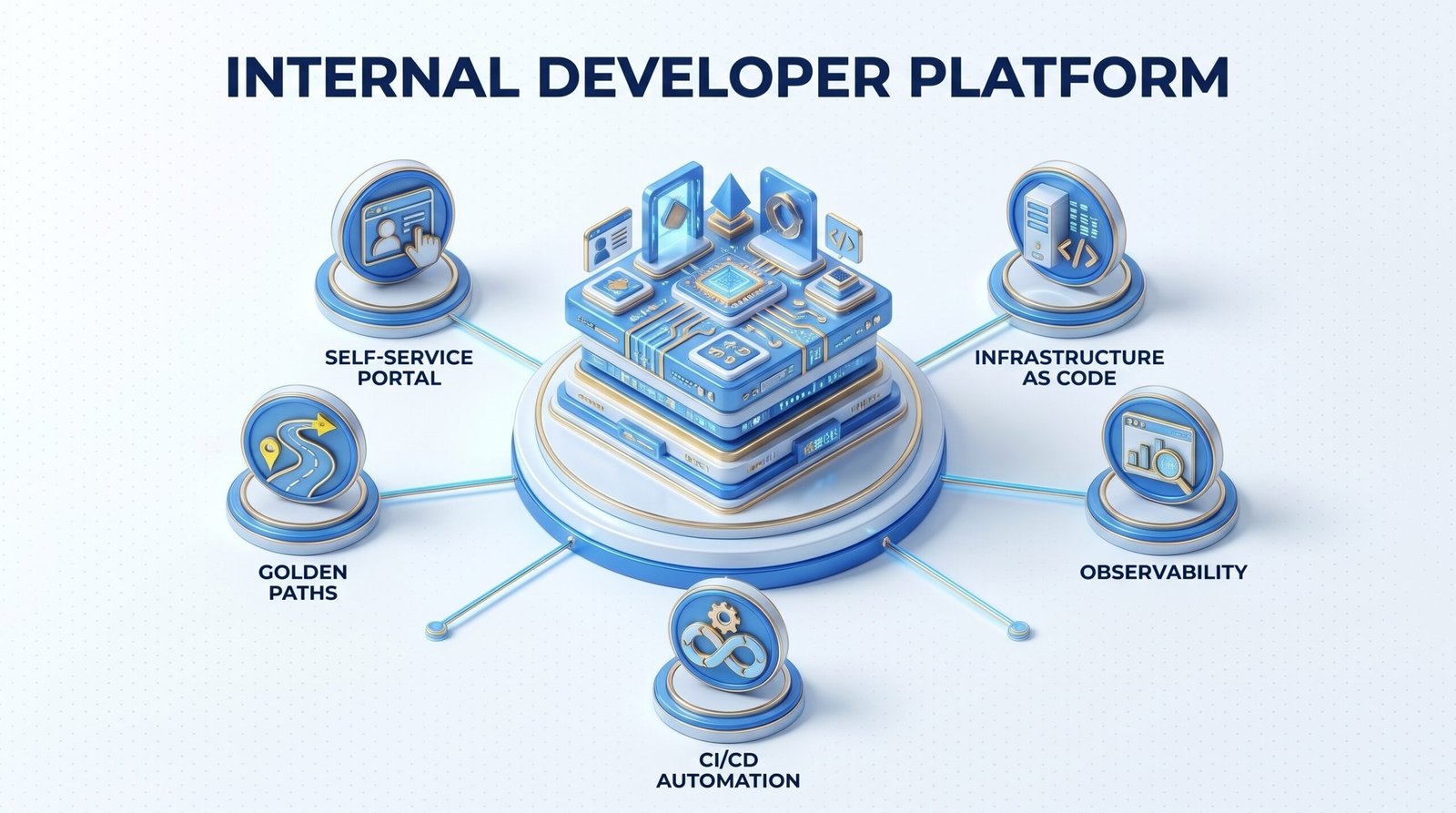
Mature platforms share five building blocks. You can start with one and grow from there.
Self-service portal. A single front door where developers create services and request environments. Open-source frameworks such as Backstage give teams a head start.
Golden paths. Opinionated, pre-approved templates for common tasks, such as launching a new service. A golden path bakes in the right defaults for security and deployment, so developers do not reinvent them.
CI/CD automation. Standard pipelines that test and release code the same way across teams. Developers push code, and the platform handles the rest.
Infrastructure as code. Reusable modules that provision cloud resources from version-controlled definitions. Teams get consistent environments and an audit trail for every change.
Observability. Built-in monitoring and tracing that appear automatically when a service launches. Developers see how their code behaves without wiring up tools from scratch.
How an Internal Developer Platform Boosts Productivity
The biggest gain comes from lower cognitive load. Developers no longer need to master every infrastructure tool to ship a feature. They follow a golden path and focus on the product problem in front of them.
Onboarding speeds up because new hires use the same templates as everyone else. Ticket queues shrink because routine requests become self-service. Standardization also reduces the variety of setups your operations team must support.
Security improves as well. When policies live inside the golden paths, every new service starts compliant. Our cyber security services team often helps platform teams encode those controls so developers get safe defaults without extra effort.
You can measure the effect. Track DORA metrics such as deployment frequency and lead time for changes. Add a developer satisfaction survey, since adoption depends on how the platform feels to use.
Treat the Platform as a Product
Most failed platforms share one flaw: the team built what it found interesting instead of what developers needed. Product thinking prevents that.
- Interview your developers. Find the top sources of friction before you write any code.
- Start with a thin platform. Ship one painful workflow, such as environment setup, and make it excellent.
- Make adoption voluntary. If developers choose the platform because it saves time, you know it works.
- Staff it like a product team. Give it a product owner and a roadmap, then close the loop with regular feedback.
The usual mistakes follow predictable patterns. Teams build a polished portal before any useful golden path exists. They also ignore feedback or try to force adoption by mandate. Each one erodes trust quickly.
Build, Buy, or Blend: Finding the Right Skills
Most organizations blend open-source frameworks with their own automation. The harder question is staffing. Platform engineers need a rare mix of infrastructure depth and product sense.
If you lack that mix in-house, resource augmentation can add experienced platform engineers to your team quickly. For a longer build, a dedicated development team keeps the roadmap moving while your own engineers stay close to the product. Where off-the-shelf tools fall short, our custom software solutions team builds the missing pieces.
Your First 90 Days
You can prove the value of a platform in one quarter if you stay focused.
- Weeks 1 to 3: Interview developers and rank their biggest delays.
- Weeks 4 to 7: Ship one golden path that removes the top delay.
- Weeks 8 to 10: Measure lead time and satisfaction, then fix the rough edges.
- Weeks 11 to 13: Expand to the next workflow and publish the results internally.
Each cycle earns the trust you need for the next one. If you want help scoping a first platform, talk to our team, and we will map the quickest route to a working golden path.
FAQ
What is an internal developer platform?
An internal developer platform is a set of self-service tools and workflows that lets developers deploy and operate software without waiting on a separate operations team.
Is platform engineering the same as DevOps?
No. DevOps is a culture of shared responsibility. Platform engineering turns those practices into a product, with a dedicated team that builds the tooling other teams use.
How big should a company be before it builds a platform?
Size matters less than duplication. Once several teams repeat the same setup and deployment work, a shared platform starts to pay off.
How do we measure platform success?
Track DORA metrics such as deployment frequency and lead time for changes. Add developer satisfaction and adoption rates, since a platform nobody uses delivers nothing.
Make the Right Way the Easy Way
A good platform does not force developers to follow the rules. It makes the secure, reliable choice the fastest one. When that happens, productivity rises without anyone needing to push.
We help engineering leaders scope a first platform and staff the team that builds it. Start small, serve your developers well, and let adoption lead the roadmap.
Contact Innosaber to plan an internal developer platform that your teams will want to use.
