
TL;DR: Custom software development for insurance replaces rigid legacy policy systems with purpose-built platforms for claims and underwriting, so insurers launch products faster and cut manual work without ripping out their core.
Insurers run on software built for a different decade. Policy administration systems from the 1990s still process claims, and a new product waits months for a developer to change one rule. Meanwhile, customers expect to file a claim from a phone and see a status update within the hour.
We build custom software for carriers and brokers. In this guide, we explain where custom software pays off and what to build first. We also cover the mistakes that stall insurtech projects.
Why Off-the-Shelf Insurance Platforms Fall Short
Packaged insurance suites handle standard products well. They struggle when you need a niche product or need to change pricing quickly. The vendor sets the roadmap, so your feature request joins a long queue. Customization often costs more than the license itself.
Custom software puts the rules in your hands. Your product team changes a rating factor without waiting for a vendor release. Your engineers connect a new data source the week you sign the data contract. If you want a primer on the approach, read our guide to what custom software development involves.
Where Custom Software Delivers the Most Value in Insurance
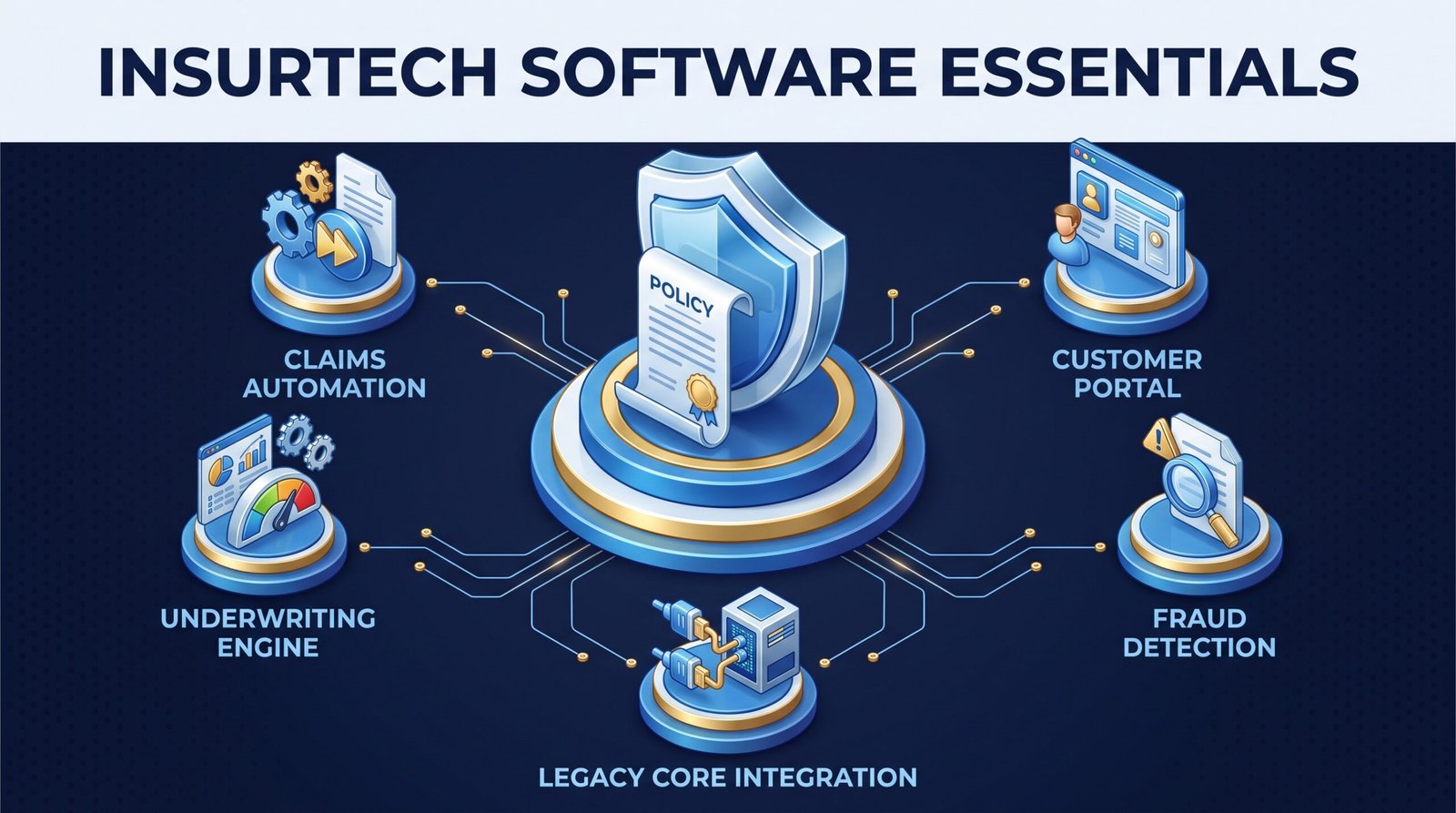
We see the strongest returns in four areas.
- Claims automation. A custom claims workflow pays simple claims straight away and flags complex ones for an adjuster. Adjusters spend their time on judgment instead of data entry, and customers receive faster settlements.
- Underwriting engines. Underwriters score risk with your own rules plus external data such as telematics or property records. A custom engine runs those checks in seconds and logs every decision for audit.
- Customer and agent portals. Policyholders renew a policy and track a claim in one place. Agents quote and bind without calling the back office. Strong UX/UI design makes these portals easy to use, and mobile app development puts them in every customer’s pocket.
- Fraud detection. Models learn patterns from your claim history and score each new claim. Investigators review the highest-risk cases first. Our AI services team builds and tunes these models.
How to Modernize Without Replacing Your Core System
Most carriers cannot switch off a core policy system overnight, and they should not try. We build new capabilities around the core and connect them through APIs. The core keeps running while new services take over one function at a time. This approach lowers risk and shows value within months.
Start with the function that causes the most pain. For many carriers, that means first notice of loss or quote turnaround. Ship that function, measure the result, and pick the next target. Our enterprise software solutions follow this phased pattern.
Compliance, Security, and Data Protection
Insurers hold sensitive personal and financial data, so regulators watch them closely. Rules vary by market, but one pattern repeats. You must protect customer data and keep an audit trail for every automated decision. Build these controls into the first release, not the last.
Access controls and encryption belong in the architecture from day one. Decision logs do too. Retrofitting them later costs more and delays launch. Our cyber security services team reviews designs early, and our cloud services team plans hosting around data residency rules.
How to Choose an Insurtech Development Partner
Pick a partner who understands insurance workflows, not only code. Ask how they integrate with legacy systems and how they test pricing logic. Ask who owns the intellectual property. Request a phased plan with a working release in the first quarter.
If your in-house team lacks capacity, a dedicated team can close the gap quickly. We cover that model in our overview of resource augmentation services.
FAQ
How much does custom insurance software cost?
Cost depends on scope, integrations, and compliance needs. A focused first release, such as a claims portal, costs far less than a full platform. We scope a phased roadmap so you pay for value as it ships.
How long does an insurtech project take?
A first release usually takes a few months. A full platform takes longer. Phasing lets you launch the highest-value function first.
Can custom software connect to our existing policy system?
Yes. We connect through APIs and integration layers, so your core system keeps running during the transition.
Is custom software better than a packaged insurance suite?
It depends on your needs. Packaged suites suit standard products. Custom software wins when you need unique products, fast rule changes, or tight integration with your own data.
Build the Insurance Platform Your Customers Expect
Insurance customers compare every experience with the best app on their phone. Legacy systems make that standard hard to meet, but you do not need to replace everything to improve.
Custom software lets you automate claims and sharpen underwriting. It also lets you launch products on your own schedule. A phased plan keeps risk low and delivers value early.
Let us help you design the first release. Contact Innosaber today.
