TL;DR: Autonomous security operations let AI investigate and respond to threats with minimal human input, but businesses need solid data and clear oversight in place before handing over that much control.
Security teams have used AI-assisted tools for years, flagging suspicious activity for a human analyst to review. Autonomous security operations go further, letting AI systems investigate alerts, correlate signals across tools, and in some cases take containment action on their own. That shift promises faster response times than any human team can match, but it also raises a real question: is your business’s security data, process maturity, and oversight structure actually ready to support it?
What Makes Security Operations “Autonomous”
Traditional security information and event management tools generate alerts and leave a human analyst to investigate each one. Autonomous security operations add a layer of AI that triages alerts and pulls in related log data automatically, forming a working theory about what happened before a human ever looks at the case. In the most advanced setups, the system can also take a first response action automatically, such as isolating a compromised device, while a human reviews the decision after the fact rather than before.
The Data Foundation Autonomous Detection Actually Needs
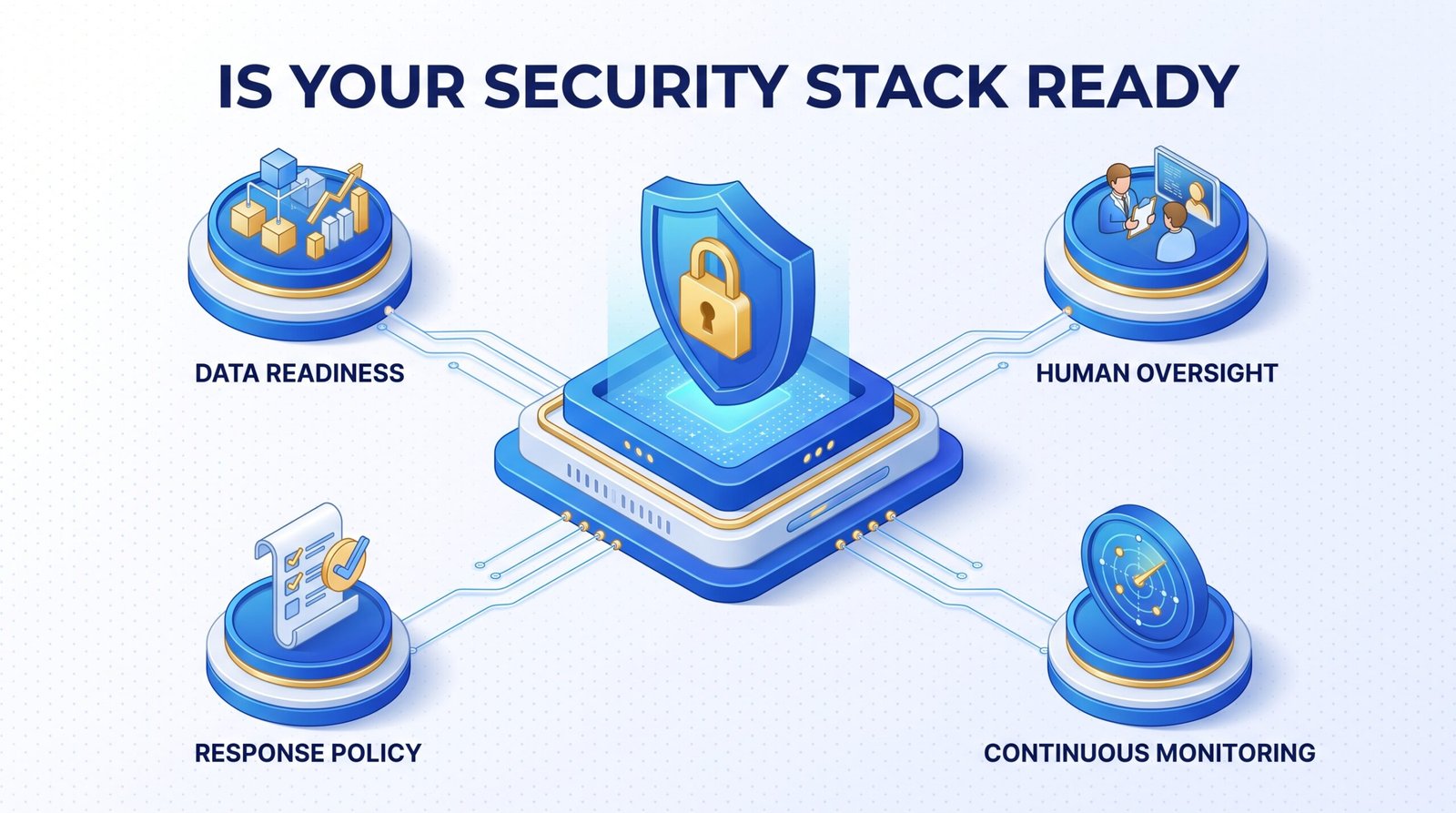
An AI system can only detect what its training and its live data actually show it. Fragmented logging and inconsistent data formats across tools limit how much an autonomous system can catch on its own, and gaps in network visibility make the problem worse. Businesses considering autonomous security operations need centralized, consistent log data across endpoints, network traffic, and cloud infrastructure before an AI layer has anything reliable to work from. Getting there often means fixing data pipelines and visibility gaps well before the AI system itself becomes the priority.
Where Full Autonomy Makes Sense, and Where It Doesn’t
Not every response action belongs in AI hands without a human check first. Isolating a single compromised endpoint is a low-risk action an autonomous system can usually handle safely. Shutting down a production database or blocking a large swath of network traffic carries a much higher cost if the system gets it wrong, and those actions typically deserve a human approval step even in an otherwise autonomous setup. Drawing that line clearly, action by action, before deployment prevents the kind of costly false positive that erodes trust in the whole system.
Building Oversight Into an Autonomous System
Autonomy does not mean removing humans from the loop entirely. Effective setups keep a security analyst reviewing a sample of autonomous decisions and tracking false positive and false negative rates over time. They also retain the ability to override or pause the system if it starts behaving unexpectedly. Zero trust security principles, applied to the AI system itself and not just the network it protects, keep an autonomous security layer from becoming a single point of failure.
Assessing Whether Your Business Is Ready
Readiness for autonomous security operations comes down to a few practical questions. Does your logging and data infrastructure give an AI system enough to work with? Do you have a clear policy for which actions require human approval? Does your team have the capacity to monitor and tune the system once it is live? A business that answers no to any of these usually benefits from closing that gap first rather than deploying autonomy and hoping the process catches up. Our cybersecurity services team can assess where your current setup stands. Talk to our team about a readiness assessment.
FAQ
Does autonomous security eliminate human analysts?
No. Most effective setups keep humans reviewing a sample of decisions and approving higher-risk response actions, even as routine triage runs autonomously.
What’s the biggest blocker to autonomous security?
Fragmented or inconsistent log data is the most common blocker, since an AI system can only detect what its data actually shows it.
Can autonomous systems contain threats on their own?
Yes, for lower-risk actions like isolating a single endpoint. Higher-risk actions, such as shutting down infrastructure, typically still require human approval.
How do you measure autonomous security performance?
Track false positive and false negative rates over time, and review a sample of the system’s decisions regularly rather than assuming accuracy stays constant.
Autonomy Should Earn Its Way Into Your Security Stack
AI-driven threat detection can respond to incidents faster than any human team, but that speed only helps if the system is working from good data and operating within clear boundaries.
The businesses that get the most from autonomous security operations treat it as a capability to build toward. That means adding oversight and testing along the way, and drawing a clear line between AI-handled actions and human-approved ones, rather than flipping a switch all at once.
Ready to find out where your business stands? Contact our team.