TL;DR: LLM cost management means matching model size to task complexity and setting spend guardrails before agentic workloads scale past budget.
Agentic AI systems call language models far more often than a single chatbot ever did. An agent that plans a task, checks its own output, and calls other tools can trigger a dozen model calls to answer one user request. Businesses that scale these workflows without a cost strategy often watch their AI bill grow faster than the value the system delivers. LLM cost management applies the same discipline that cloud FinOps brings to infrastructure spend, adjusted for how language models actually charge: by token, by context length, and by model tier.
Why Agentic Workloads Cost More Than a Single Chat Call
A traditional chatbot sends one prompt and receives one response. An agent works differently. It might call a model to plan the task, call it again to select a tool, call it a third time to check the tool’s output, and call it once more to decide the next step. Each of these calls carries its own token cost, and the number of calls grows with the complexity of the task rather than staying fixed. A support agent handling a simple question might cost a fraction of a cent. The same agent handling a multi-step troubleshooting flow can cost far more, and that difference is easy to miss until the monthly invoice arrives.
Matching Model Size to Task Complexity
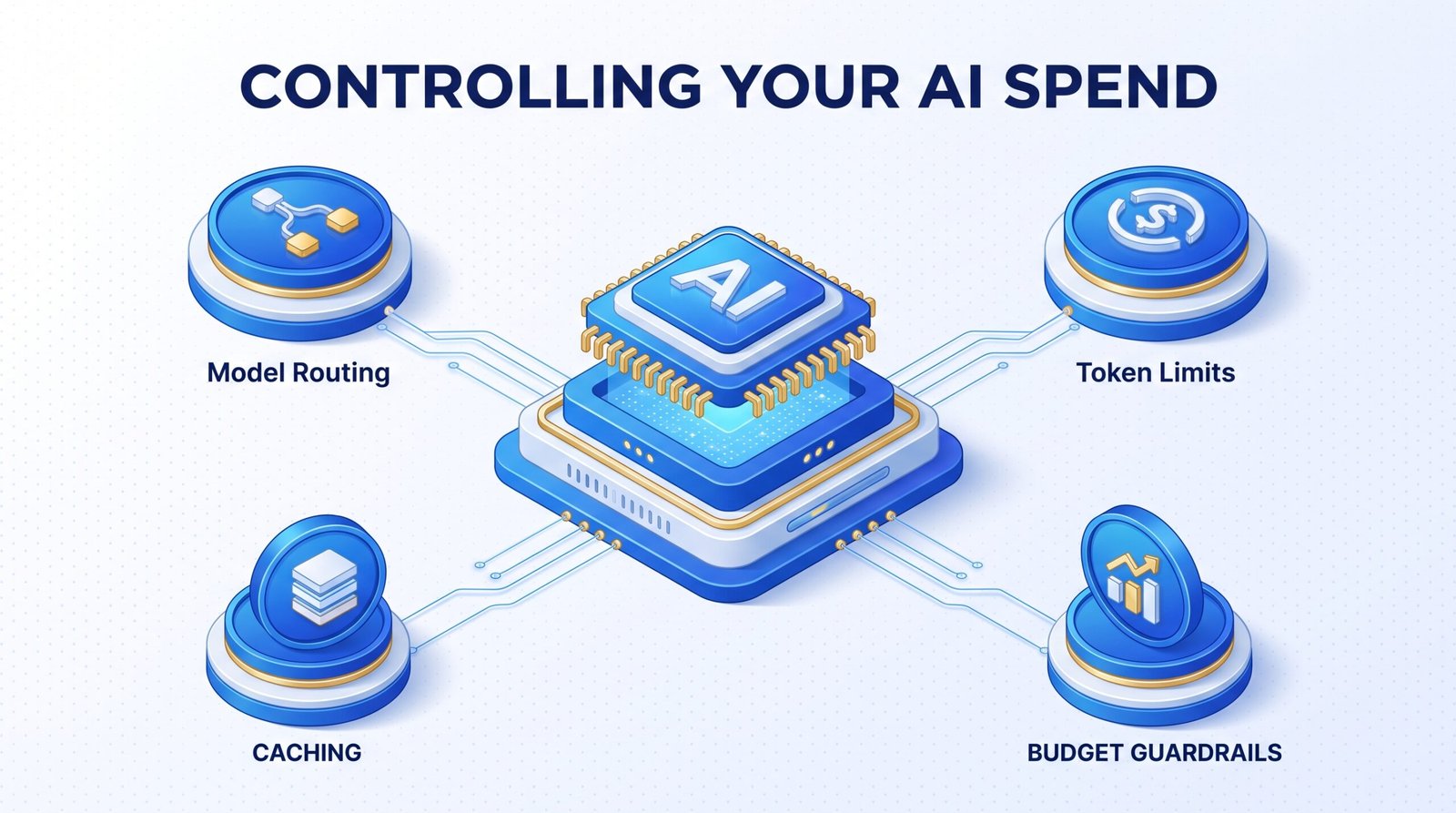
Not every step in an agentic workflow needs the largest available model. Routing simple classification or extraction tasks to a smaller, cheaper model, while reserving the most capable model for genuinely complex reasoning, cuts costs without hurting output quality. Businesses building custom software with this kind of tiered routing in mind tend to scale more predictably than systems that call the same large model for every step by default.
Token Usage Is the Line Item Nobody Watches Closely Enough
Token cost depends on both prompt length and response length, and long context windows make it easy to send far more text than a task needs. Feeding an agent an entire document when it only needs one paragraph wastes tokens on every single call. Trimming context to what a step genuinely requires and summarizing long conversation history instead of resending it in full are among the fastest ways to bring a runaway token bill back under control. Setting a hard limit on response length closes the door on the rest.
Caching and Batching Cut Redundant Calls
Agentic systems often ask a model the same or a very similar question multiple times across a session. Caching common responses and batching requests that do not need an immediate answer reduces the number of billable calls a workload generates. A cloud services setup that supports request queuing and caching at the infrastructure layer captures these savings automatically instead of relying on every application team to build it themselves. Businesses already tracking cloud spend through FinOps practices will recognize the same principles applied here to model usage.
Building Budget Guardrails Before You Scale
The businesses that handle LLM costs well set spend limits and alerts before scaling an agentic workload, not after the first oversized invoice. Per-project budgets and usage dashboards broken down by workflow catch runaway spend early. Automatic throttling, triggered when a task exceeds an expected token count, adds another layer of protection. Enterprise AI services built with these guardrails from the start let a business scale agent usage with confidence instead of bracing for the next bill. Not sure how to structure cost controls for your own agentic workloads? Talk to our team about a cost review.
FAQ
Is LLM cost management only relevant for large enterprises?
No. Even a small deployment can generate unexpectedly high costs once an agent starts making multiple calls per task, so cost controls matter at any scale.
Does using a smaller model always mean lower quality?
Not for every task. Simple classification, extraction, and routing steps often perform just as well on a smaller model, which is why tiered routing saves money without sacrificing output on the steps that need the largest model.
How much can caching actually save?
Savings vary by workload, but sessions with repeated or similar queries commonly see a meaningful reduction in billable calls once caching is in place.
What is the first step toward controlling agentic AI costs?
Start by tracking token usage per workflow step, since that visibility is what reveals which parts of an agent’s process are actually driving the bill.
Don’t Let Agent Autonomy Outpace Your Budget
Agentic AI systems earn their value by handling multi-step work without constant human input, but that same autonomy is what makes their costs harder to predict than a simple chatbot.
Model routing, token discipline, caching, and spend guardrails turn an unpredictable AI bill into a
managed, forecastable cost, the same way FinOps turned cloud spend into something a business can
actually plan around.
Ready to build agentic AI workflows that scale without surprising your finance team? Contact our team.