TL;DR: Post-quantum cryptography protects your business systems against future quantum computers that could break today’s encryption, and preparing now means auditing your systems and planning a migration before the threat becomes real.
Every business relies on encryption that assumes no computer available today can break the underlying math fast enough to matter. Quantum computing threatens that assumption. Once quantum machines reach sufficient scale, they will crack the encryption standards that currently protect emails, financial transactions, and stored customer records.
This is not a distant hypothetical. Attackers are already collecting encrypted data today with plans to decrypt it once quantum computers catch up, a strategy security researchers call harvest now, decrypt later. Businesses that wait until quantum computers arrive before preparing will find years of historical data already exposed. This article covers what post-quantum cryptography means, why the timeline matters now, and how to start preparing your systems.
What Is Post-Quantum Cryptography?
Post-quantum cryptography, or PQC, refers to encryption algorithms built to resist attacks from quantum computers. Today’s most common encryption methods, including RSA and elliptic curve cryptography, rely on math problems that classical computers cannot solve in a reasonable amount of time. A sufficiently powerful quantum computer running Shor’s algorithm could solve those same problems far faster, making current encryption useless.
In 2024, the National Institute of Standards and Technology finalized the first set of post-quantum encryption standards, including algorithms built on lattice-based and hash-based math that quantum computers cannot easily break. These standards give businesses a concrete target to migrate toward, rather than waiting on an evolving research field.
Why “Harvest Now, Decrypt Later” Changes the Timeline
Quantum computers capable of breaking RSA encryption at scale do not exist yet, but that fact matters less than it seems. Nation-state actors and sophisticated attackers already intercept and store encrypted traffic today, betting that a working quantum computer will arrive within the data’s useful lifespan.
Some data stays sensitive for decades. Health records, legal contracts, trade secrets, and government communications often need protection well beyond a five- or ten-year window. If an attacker holds encrypted copies of that data now, a future quantum breakthrough could expose it all retroactively, no matter how far away that breakthrough is today.
Which Systems Carry the Most Risk
Not every system needs the same urgency, but a few categories deserve early attention.
Long-lived sensitive data such as health records, legal documents, and intellectual property held for years needs the strongest protection, since it stays valuable to attackers long after today’s encryption goes obsolete.
Public key infrastructure and TLS certificates secure most web traffic and internal communications, making them a foundational piece of any migration plan.
VPNs and authentication systems protect access to internal networks, and a break here would expose everything those systems were meant to guard.
Software supply chain signing verifies that code and updates come from a trusted source, and a compromised signing key could let attackers distribute malicious software under a business’s name.
How to Start Preparing Your Business
A full migration to post-quantum cryptography will take most businesses years, not months, which makes starting early the actual advantage. A structured approach keeps the process manageable.
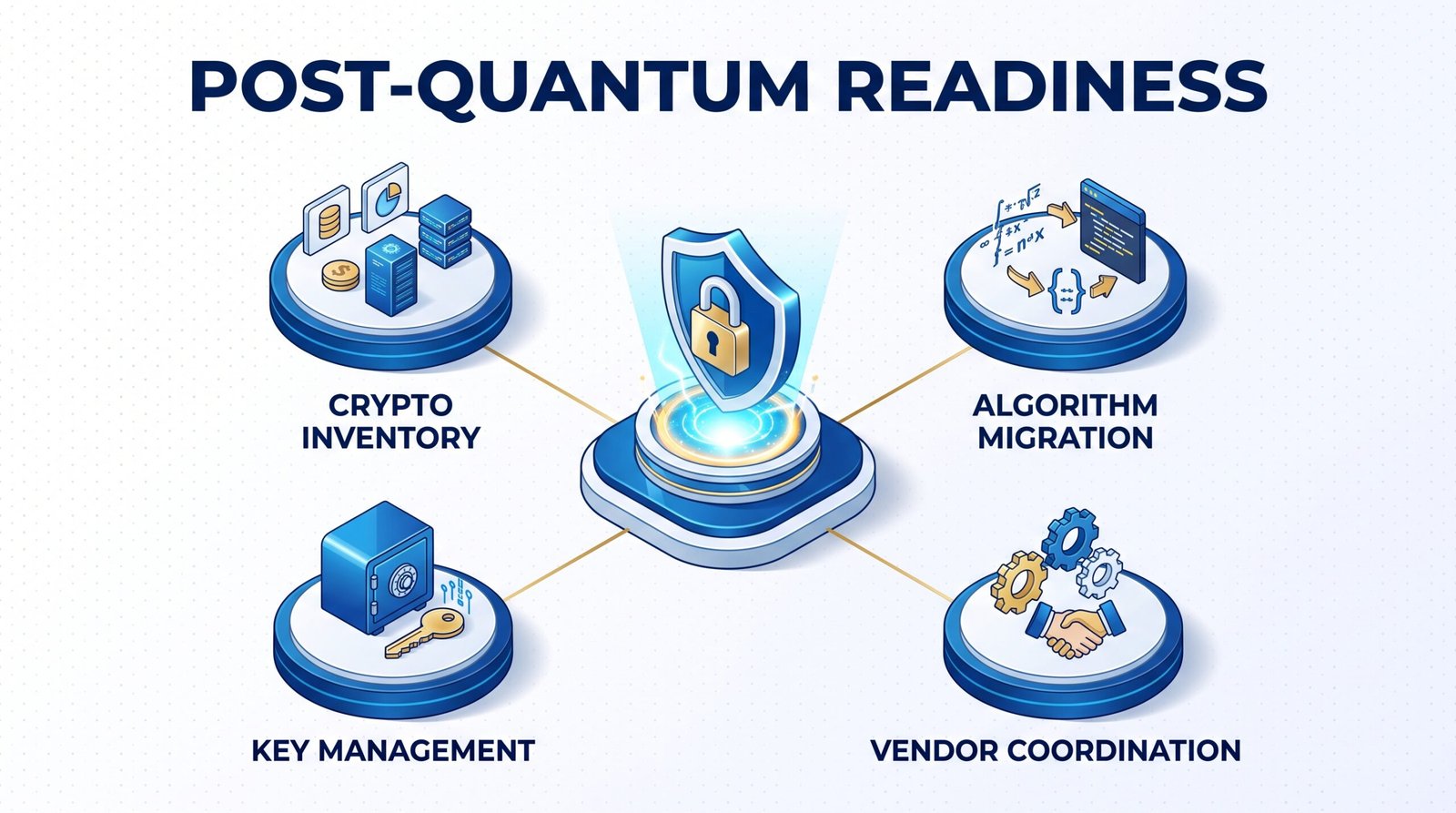
Begin with a cryptographic inventory. Most businesses do not have a clear picture of where encryption lives across their systems, vendors, and third-party integrations. You cannot migrate what you have not mapped.
Prioritize based on data sensitivity and lifespan. Systems holding long-lived, high-value data deserve migration first, while lower-risk systems can wait for later phases.
Build toward crypto-agility. Rather than hardcoding a single encryption algorithm throughout your systems, design infrastructure that can swap algorithms without a full rebuild. This protects against future changes in the standards themselves, not just the current quantum threat.
Our cybersecurity services team runs cryptographic audits that map where your business stands today and builds a realistic migration roadmap from there, instead of a generic checklist that ignores your actual infrastructure.
FAQ
Worry about quantum computing before it breaks encryption?
Yes, if your business holds long-lived sensitive data. The harvest now, decrypt later risk means encrypted data stolen today could be exposed once quantum computers catch up, even years from
now.
What is harvest now, decrypt later?
It describes attackers collecting and storing encrypted data today, with the intention of decrypting it once quantum computing makes that possible, rather than attempting to break the encryption immediately.
Are NIST’s post-quantum standards ready to use in production?
Yes. NIST finalized its first set of post-quantum algorithms in 2024, giving businesses a stable standard to build migration plans around rather than waiting on further research.
How long does a full post-quantum migration take?
Most businesses need multiple years to fully migrate, depending on the size and complexity of their systems. Starting with a cryptographic inventory and prioritizing high-risk systems first makes the timeline manageable.
Encryption You Trust Today Won’t Protect You Forever
The businesses that treat post-quantum cryptography as a future problem are the ones most likely to get caught flat-footed. Quantum computers do not need to exist today for the risk to be real, since encrypted data collected now stays exposed for as long as it remains sensitive.
Starting the migration early costs far less than reacting to a breach after the fact. A cryptographic inventory, a prioritized roadmap, and infrastructure built for crypto-agility put your business ahead of a threat that keeps getting closer, not further away.
Contact Innosaber to start your post-quantum readiness assessment.