
TL;DR: Real-time data pipelines stream events to your systems within seconds, while batch jobs deliver data hours later. Move to streaming where late data costs money, such as fraud checks and live inventory, and keep batch for the rest.
Many companies still run their data on a nightly schedule. A job collects the day’s records and processes them overnight. Reports arrive the next morning. That routine worked when decisions could wait a day. It fails when a fraudulent payment clears in seconds, or a popular product sells out before lunch.
Real-time data pipelines change that timing. They move each event through your systems as it happens. This article explains how they work and where they pay off. It also shows how to adopt them without rebuilding everything.
What Is a Real-Time Data Pipeline?
A real-time data pipeline moves data from its source to its destination within seconds of creation. Sources include payment systems, website clicks, sensors, and application logs. A streaming platform such as Apache Kafka carries the events. A processing engine such as Apache Flink cleans and enriches them. The results land in a dashboard or trigger an action in another application.
Batch pipelines work differently. They collect data for a fixed period and process it in one large run. Batch is simple and cheap. It also means your data is always at least one cycle old.
Why Batch Processing Falls Short Today
Customer expectations and competitive pressure have changed what “fast enough” means. A shopper expects the stock count on your site to be accurate. A bank customer expects a suspicious charge to trigger an alert immediately. Delays in your data turn into lost sales and lost trust. Batch processing causes four specific problems:
- Stale decisions. Pricing and stock levels reflect yesterday, not now.
- Missed risk signals. Fraud and outages surface after the damage happens.
- Slow AI. Models that run on old data give old answers.
- Heavy overnight jobs. Large batch runs strain your systems and fail at awkward hours.
AI systems depend on fresh data more than most. An AI solution that recommends products from yesterday’s clicks misses what the customer wants right now.
Where Real-Time Pipelines Pay Off
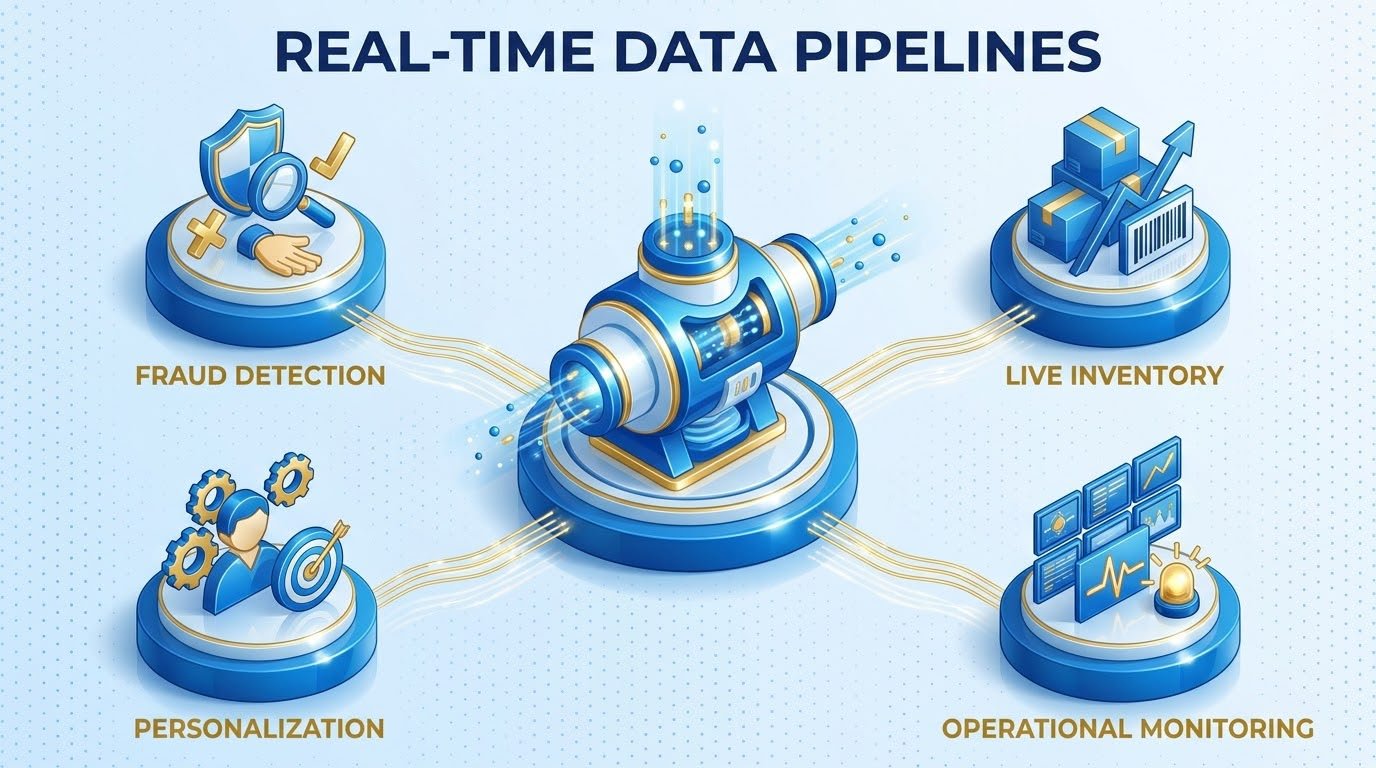
- Fraud detection. Flag suspicious transactions before the payment completes.
- Live inventory. Keep stock counts accurate across your store and your warehouse.
- Personalization. Change recommendations while a shopper is still browsing.
- Operational monitoring. Catch failures in your systems or machines as they occur.
These cases share one trait: the value of the data drops fast. If a fact loses its worth within minutes, stream it. If it stays useful for a day, batch works fine.
When Batch Still Makes Sense
Real-time is not always better. Monthly financial reports and payroll runs gain nothing from streaming. Streaming systems cost more to build and operate. They require around-the-clock monitoring and engineers who understand event-driven design. Use them only where speed changes the outcome.
Most businesses end up running both. Batch handles reporting and historical analysis, and streaming handles the moments that cannot wait.
How to Move From Batch to Real-Time
- Pick one use case where late data costs you money, and measure that cost.
- List the source systems and confirm that they can publish events.
- Build a small pipeline on managed cloud services, so you avoid running streaming infrastructure yourself.
- Run the pipeline beside your batch job for a few weeks and compare the results. Then retire the batch job for that use case.
Start small. A single pipeline that proves its value builds the case for the next one. Design for failure from the start, because streaming systems must handle duplicate events and late arrivals without losing data.
Secure every stream. Event data often contains customer information, so apply access controls and encryption from the first day. Our cybersecurity team can help you set this up.
Want to see whether streaming fits your systems? Speak with our team about your data sources. We design and build pipelines through our custom software development and enterprise software work.
FAQ
Difference between batch and real-time data processing?
Batch processing collects data over a period and handles it in one scheduled run. Real-time processing handles each event within seconds of its creation. Batch favors simplicity and low cost. Real-time favors speed.
Is real-time data processing expensive?
It costs more than batch to build and run, mainly because streaming systems need constant monitoring and specialized skills. Managed cloud services reduce that burden. The cost makes sense when delayed data loses money.
What tools do real-time data pipelines use?
Common choices include Apache Kafka for moving events and Apache Flink for processing them. Managed streaming services from the major cloud providers cover both jobs. The right mix depends on your data volume and your team’s skills.
Do I need to replace my existing batch pipelines?
No. Keep batch for reporting and historical analysis, and add streaming only where fresh data changes a decision.
Speed Only Matters Where Time Is Money
Batch processing still earns its place in reporting and analysis. It falls short wherever a decision loses
value by the minute. Real-time data pipelines close that gap for fraud checks and live inventory, along
with other time-sensitive work.
Start with one use case and prove the return. Then expand from there. We build these pipelines for
growing businesses and keep them reliable. Get in touch and we will help you find your first one.
