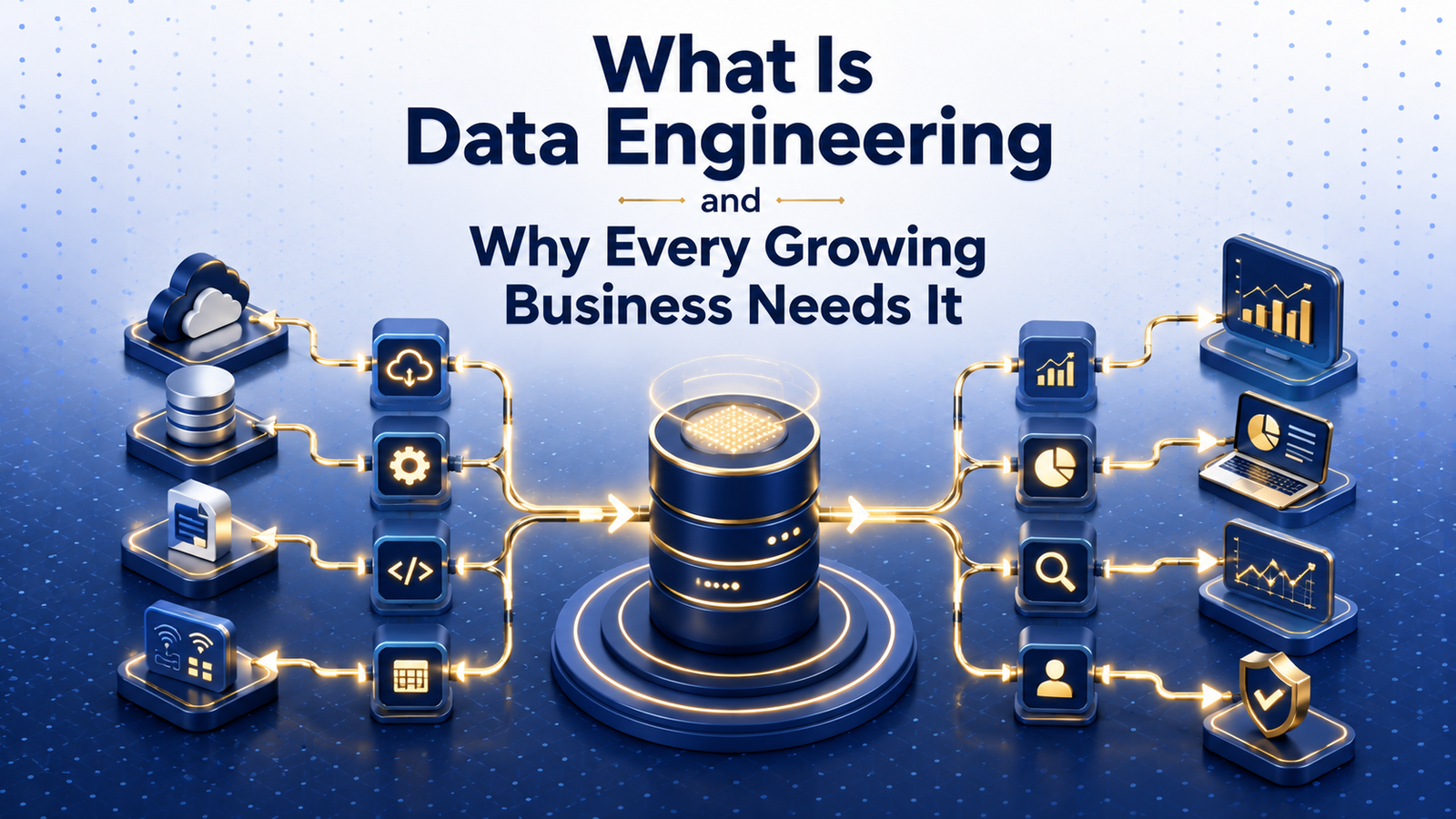
TL;DR: Data engineering is the practice of building reliable systems that collect, clean, and connect a business’s data so it can actually be used for reporting, automation, and decision-making.
Most growing businesses hit the same wall. Sales data lives in a CRM, order data lives in an ERP, support tickets live in a helpdesk tool, and none of it talks to each other. Someone spends a day every month exporting spreadsheets and stitching numbers together by hand, and the resulting report is already out of date by the time it lands in an inbox. Data engineering is the discipline that fixes this problem at the source rather than patching it every month with more manual work.
What Data Engineering Actually Involves
- Two departments quote different numbers for what should be the same metric.
- Someone on the team has become the unofficial, irreplaceable keeper of a critical spreadsheet.
- New tools or data sources keep getting added, but nothing connects them to the rest of the business.
- Leadership wants real-time or near real-time visibility into operations, not a monthly recap.
Core Components of a Modern Data Pipeline
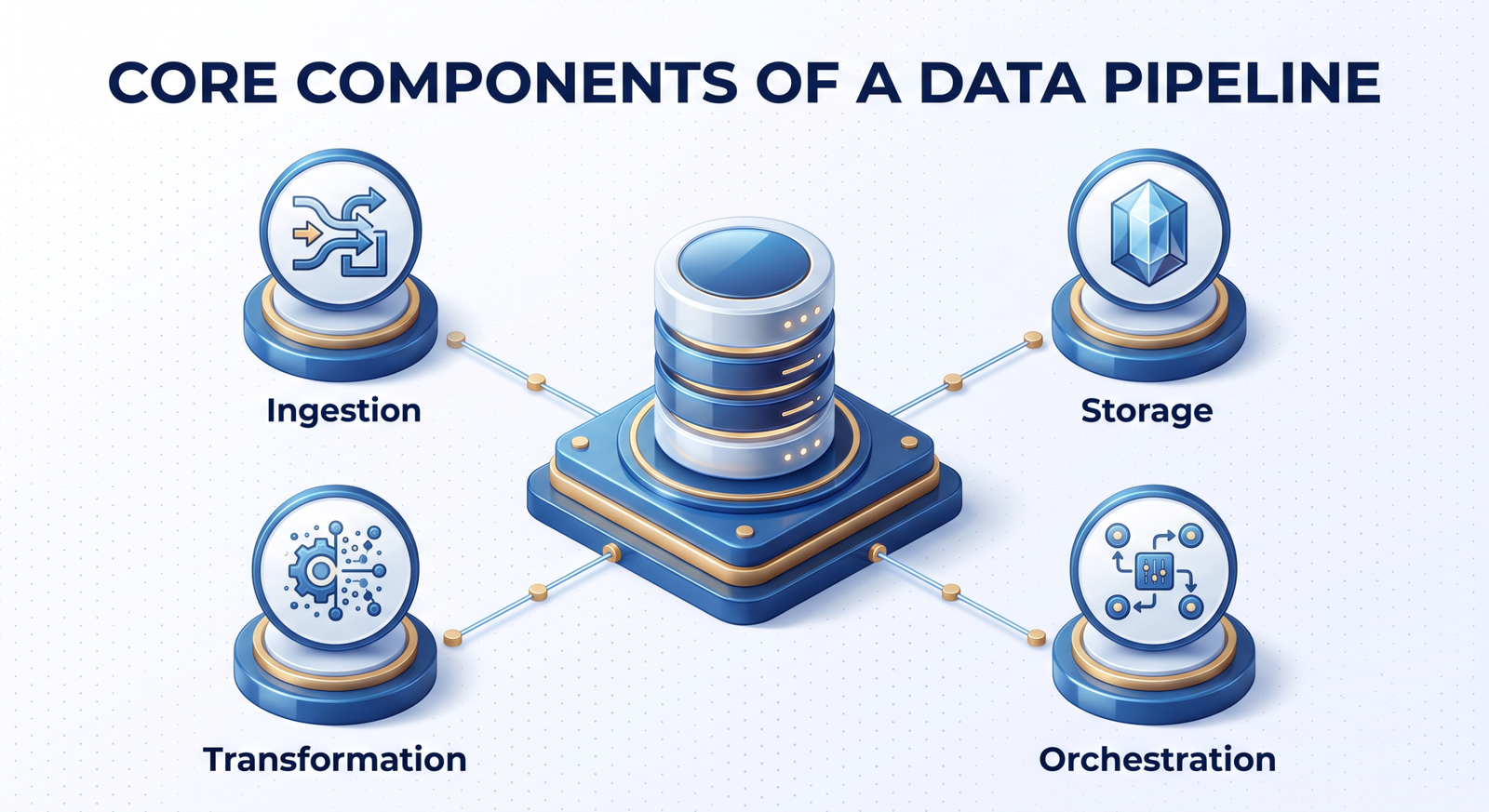
A well-built pipeline usually includes a few consistent pieces regardless of industry: ingestion tools that pull data from source systems on a schedule, a storage layer such as a data warehouse that holds the cleaned data, transformation logic that standardizes formats and names, and orchestration that runs the whole process automatically. This is often built alongside broader cloud services work, since most modern pipelines run on cloud infrastructure rather than on-premises servers.
Once that foundation exists, it becomes far easier to layer on reporting tools, forecasting models, or AI services that depend on clean, structured data to produce anything useful.
Building a Data Engineering Foundation That Scales
The businesses that get the most value from data engineering treat it as infrastructure, not a one-time project. Pipelines need monitoring, and data sources change as a business adopts new tools, so the system needs room to grow. This is usually where custom and enterprise software solutions converge, since off-the-shelf connectors rarely cover every system a growing business runs on.
If your team is still stitching reports together by hand or arguing over whose numbers are right, talk to our team and we’ll walk through what a pipeline built for your specific systems would look like.
FAQ
Data Engineering vs. Data Science: What’s the Difference?
Data engineering builds and maintains the pipelines that move and clean data. Data science uses that data to build predictive models. Data engineering usually has to exist first for data science to produce reliable results.
Do small or mid-sized businesses really need data engineering?
Any business juggling more than two or three disconnected systems benefits from it. The pain point is rarely company size; it’s the number of tools generating data that nobody has connected yet.
How long does it take to build a first data pipeline?
A focused first pipeline connecting your core systems typically takes a few weeks to a couple of months, depending on how many sources are involved and how clean the underlying data already is.
Does data engineering require replacing our existing software?
Usually not. Pipelines are built to pull from the systems you already use. Replacement is only necessary if a current tool has no way to export or expose its data.
Turning Scattered Data Into a Real Asset
Every growing business eventually generates more data than manual processes can handle. The difference between businesses that turn that data into a genuine advantage and those that stay buried in spreadsheets usually comes down to whether someone built the pipeline underneath it.
Innosaber designs data pipelines around the systems a business already runs, so reporting, automation, and AI tools all draw from the same reliable source. Reach out to start mapping out your data foundation.