TL;DR: Sovereign AI means running AI models and storing data within a country’s own legal and physical borders, and businesses need to weigh compliance, latency, and cost before choosing where their AI infrastructure lives.
Governments across the world are tightening rules on where data can be stored and processed, and AI workloads are increasingly caught in that shift. A business running AI models on infrastructure outside its own country’s borders may face restrictions it did not anticipate a year ago. Sovereign AI has emerged as the response, and businesses now need to understand what it actually requires before choosing an architecture.
What Sovereign AI Actually Means
Sovereign AI describes AI infrastructure, models, and data that stay within a specific country’s legal jurisdiction and physical borders. This includes where the underlying servers sit, which government’s laws govern the data, and who can compel access to it. A business using a global cloud provider may unknowingly store sensitive data outside its home country, which sovereign AI setups are designed to prevent.
The concept applies to both the AI model itself and the data it processes, and businesses often need to address both separately.
Why Data Residency Rules Are Driving the Conversation
Data residency laws now require certain categories of data, particularly financial, health, and government-related records, to stay within national borders. Businesses operating under these rules increasingly need cloud infrastructure built with residency in mind from the start, rather than retrofitted after a compliance audit flags a gap.
As more countries introduce similar rules, sovereign AI has moved from a niche government concern to a mainstream business planning question.
Sovereign AI vs Public Cloud AI: The Real Trade-offs
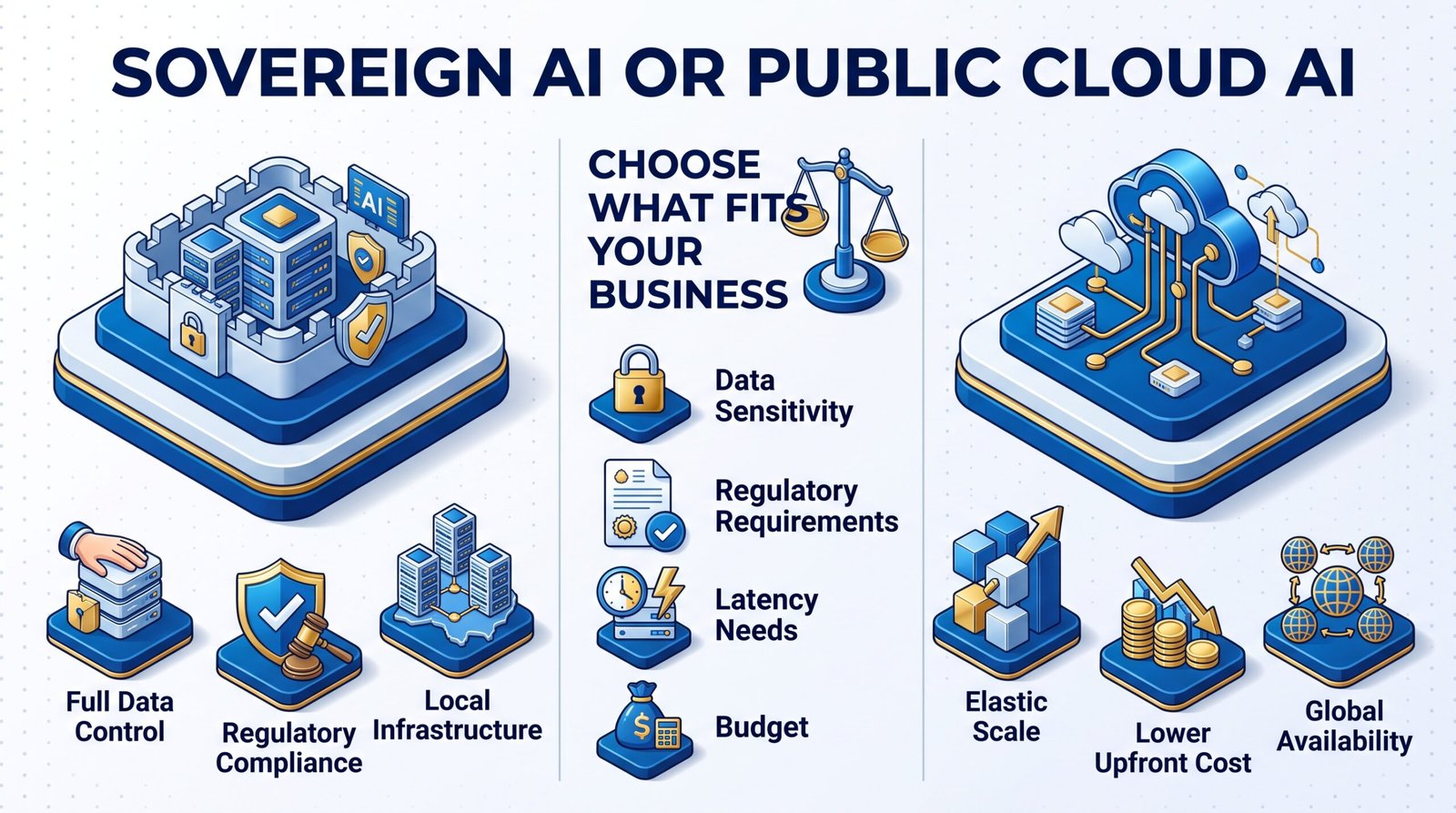
Public cloud AI offers elastic scale, lower upfront cost, and fast access to the latest models, since providers spread infrastructure costs across millions of customers. Sovereign AI trades some of that convenience for direct control over data location, clearer compliance posture, and reduced exposure to foreign legal requests.
Neither option is universally better. A business handling mostly public marketing data has little reason to pay for sovereign infrastructure, while one handling regulated financial records may have no real choice.
Where Compliance Requirements Push Businesses Toward Sovereignty
Regulated industries, including finance, healthcare, and government contracting, face the clearest pressure toward sovereign AI, since their existing compliance frameworks often already mandate data residency. Security and compliance reviews increasingly flag AI workloads specifically, not just traditional data storage, as auditors catch up to how AI systems actually process information.
Building a Sovereign-Ready Architecture
A sovereign-ready setup does not necessarily mean abandoning public cloud entirely. Many businesses use a hybrid approach, keeping sensitive workloads on sovereign or on-premises infrastructure while running lower-risk AI workloads on public cloud for cost efficiency. Enterprise architecture planning determines which workloads belong where, based on data sensitivity rather than a blanket policy.
Choosing the Right Setup for Your Business
The right sovereign AI strategy depends on what data a business actually handles, which regulations apply, and how much latency or cost trade-off is acceptable. Starting with a clear inventory of data types and their sensitivity makes the architecture decision far more straightforward.
Not sure whether your business needs sovereign AI infrastructure or a hybrid approach? Talk to our team about your options.
FAQ
Is sovereign AI only relevant for government organisations?
No. Any business handling regulated data, including finance and healthcare companies, increasingly faces the same residency requirements as government agencies.
Does sovereign AI always cost more than public cloud?
Often yes, since dedicated or localised infrastructure lacks the scale efficiencies of global cloud providers, though the gap is narrowing as sovereign options mature.
Can a business use both sovereign and public cloud AI?
Yes. A hybrid approach is common, keeping sensitive workloads sovereign while running lower-risk workloads on public cloud.
What is the first step toward a sovereign AI strategy?
Start by classifying your data by sensitivity and regulatory requirement, since that determines which workloads actually need sovereign infrastructure.
Know Where Your Data Lives Before Regulators Ask
Sovereign AI is no longer a government-only concern. Businesses handling regulated data face growing pressure to know exactly where their AI infrastructure and data physically reside.
The right approach rarely means an all-or-nothing choice. A hybrid setup, informed by a clear data sensitivity review, gives most businesses the compliance posture they need without giving up cloud efficiency entirely. Ready to get started? Contact our team.