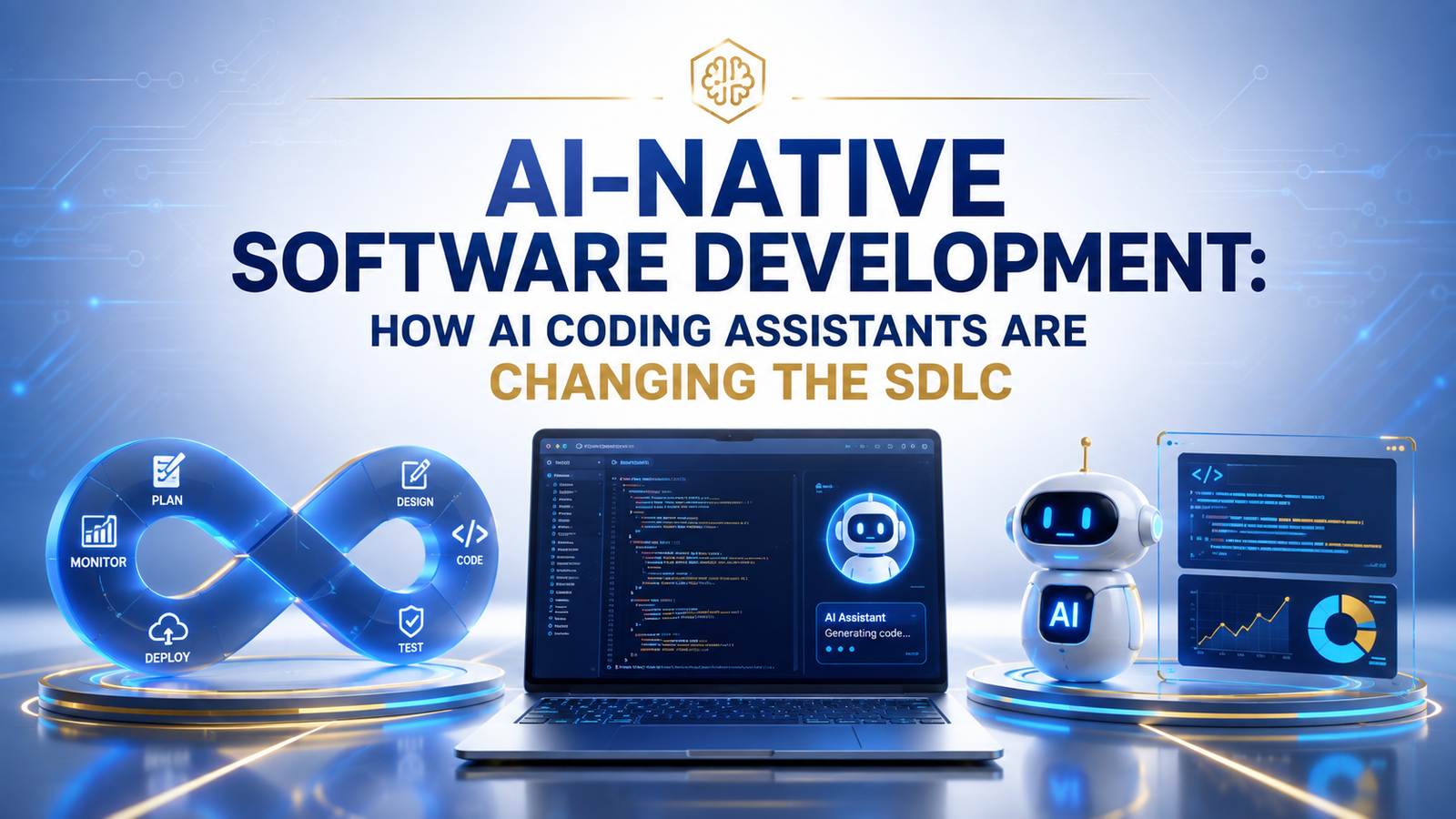
TL;DR: AI-native software development embeds AI coding assistants across planning, coding, testing, and deployment, changing how software teams build and ship products at every stage.
AI coding assistants started out as autocomplete tools, suggesting the next line of code inside an editor. That role has expanded quickly. Teams now use AI across requirements planning, test generation, code review, and deployment monitoring, not just while typing. This broader shift is what businesses mean when they talk about AI-native software development, and it changes how software teams are structured, not just how they code.
What “AI-Native” Actually Means for Development Teams
AI-native development treats AI assistants as a standing part of the workflow, rather than an occasional tool a developer reaches for. Instead of writing every function manually, developers describe intent and review AI-generated implementations, shifting their time toward architecture, judgment calls, and edge cases. Custom software teams that adopt this approach early tend to ship faster without sacrificing code quality, provided review discipline stays strong.
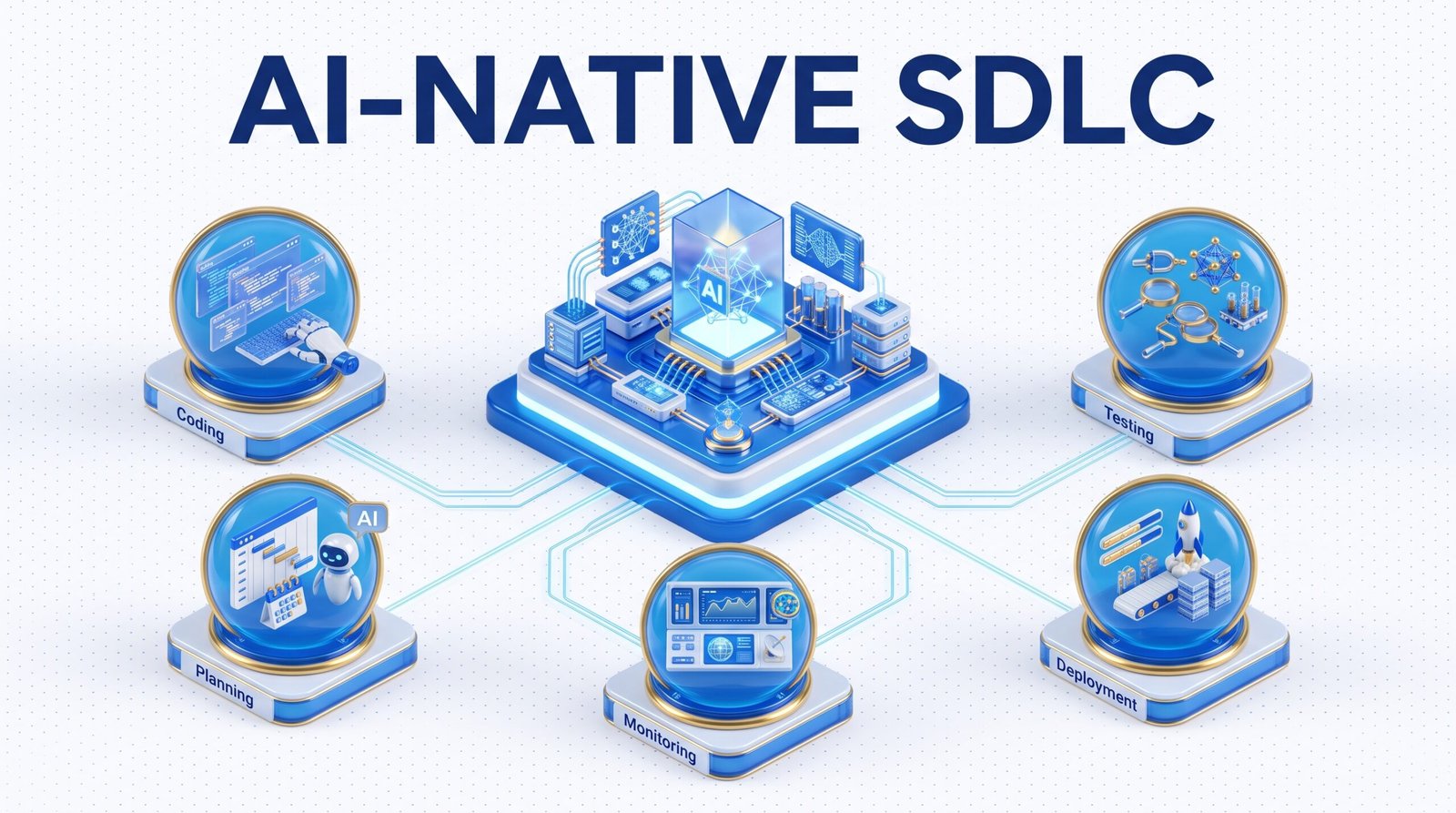
Planning and Requirements: AI as a First Draft Partner
AI assistants now help translate a product idea into structured requirements, user stories, and technical specifications before a single line of code gets written. This does not replace product and engineering judgment, but it removes the blank page problem and surfaces edge cases a team might miss during a rushed planning session.
Coding: From Autocomplete to Autonomous Implementation
Modern AI coding assistants handle far more than single-line suggestions. Given a clear specification, they can implement entire functions, refactor existing code, or migrate a codebase to a new framework, with a developer reviewing and adjusting the output rather than writing it from scratch. AI-assisted development workflows work best when paired with strong version control and clear coding standards, since AI output still needs a human standard to match.
Testing and QA: Catching What Humans Miss
AI assistants generate test cases faster than most developers write them manually, and they are particularly good at covering edge cases a human reviewer might not think to test. This does not eliminate the need for human QA judgment, especially around business logic, but it raises the baseline coverage most teams achieve.
Deployment and Monitoring: AI in the Feedback Loop
Beyond writing code, AI tools increasingly monitor deployed applications, flagging anomalies, suggesting rollback decisions, and even drafting the fix for a detected bug before a developer looks at it. This closes the loop between writing code and maintaining it in production, shortening the time between a problem appearing and a fix shipping.
What This Means for How Teams Are Structured
As AI takes over more repetitive implementation work, development teams are shifting toward smaller groups doing higher-level architecture and review work, with AI handling the volume of routine implementation. This does not remove the need for experienced developers. It changes what they spend their time on.
Thinking about how to bring AI-native practices into your development process? Talk to our team.
FAQ
Does AI-native development require fewer developers?
It shifts what developers spend time on, from routine implementation toward architecture and review, rather than eliminating the role.
Are AI-generated code changes safe to deploy without review?
No. Human review remains essential, particularly for business logic and security-sensitive code, even as AI handles more of the initial implementation.
Which part of the SDLC benefits most from AI right now?
Testing and code generation show the clearest gains today, since AI can generate broad coverage quickly, though review discipline still matters throughout.
Is AI-native development only for large engineering teams?
Smaller teams often benefit more relative to their size, since AI assistance offsets the narrower bandwidth a small team has for routine work.
The SDLC Is Being Rebuilt Around AI, Not Just Assisted by It
AI-native development is not a single tool added to an existing process. It changes how planning, coding, testing, and deployment fit together across the entire software lifecycle.
Teams that treat AI as a standing part of the workflow, with clear review standards at every stage, tend to ship faster without the quality trade-offs early adopters worried about.
Ready to get started? Contact our team.