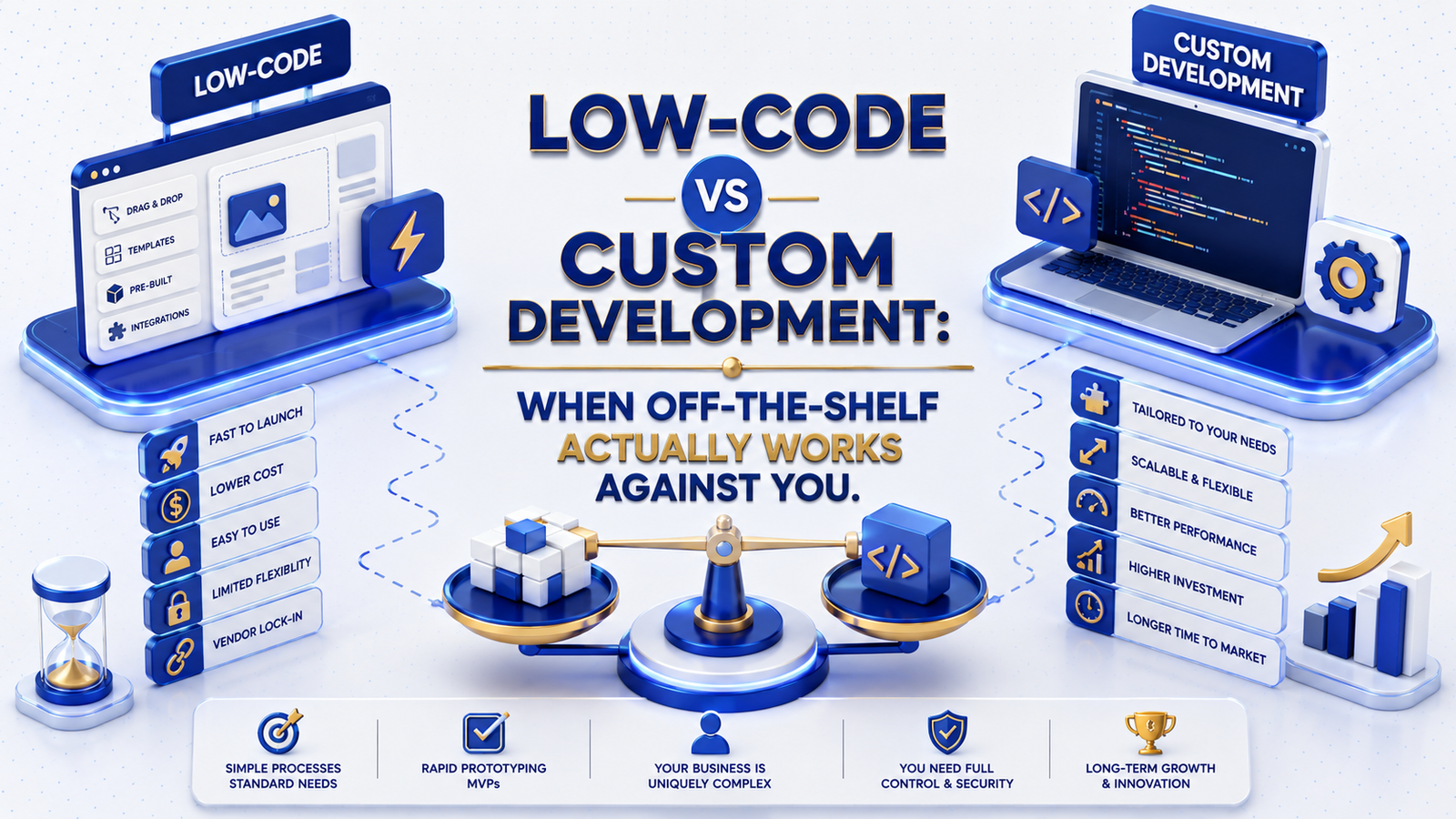
TL;DR: Low-code platforms are faster and cheaper for simple, standard workflows, but they start working against a business once its processes, integrations, or scale outgrow what the platform was built to handle.
Low-code platforms promise working software in weeks instead of months, and for many internal tools and simple apps, that promise holds up. The trouble starts when a business picks low-code for something it was never designed for, then spends the next year fighting the platform instead of building on custom-built foundations. This guide covers what low-code genuinely does well, where it quietly becomes the more expensive option, and how to tell which side of that line your project sits on.
What Low-Code Actually Does Well
Low-code platforms let a team assemble an application from pre-built components instead of writing every line by hand. For the right use case, that trade genuinely pays off.
- Internal tools with standard forms, approvals, and dashboards
- Simple customer-facing apps that map closely to the platform’s built-in templates
- Prototypes and proofs of concept that need to be tested before a bigger investment
- Workflows that rarely change and don’t require deep integration with other systems
Where Low-Code Starts Working Against You
The same speed that makes low-code attractive becomes a liability once a project moves past what the platform was designed for.
- Custom business logic that doesn’t fit the platform’s built-in patterns forces awkward workarounds
- Deep integrations with legacy systems or unusual data sources often hit hard platform limits
- Performance degrades once usage or data volume grows past what the platform handles well
- Vendor lock-in means the app lives entirely inside someone else’s platform, pricing, and roadmap
- Customization ceilings show up right when the business needs the app to do one more thing it
wasn’t built for
The Real Cost Comparison
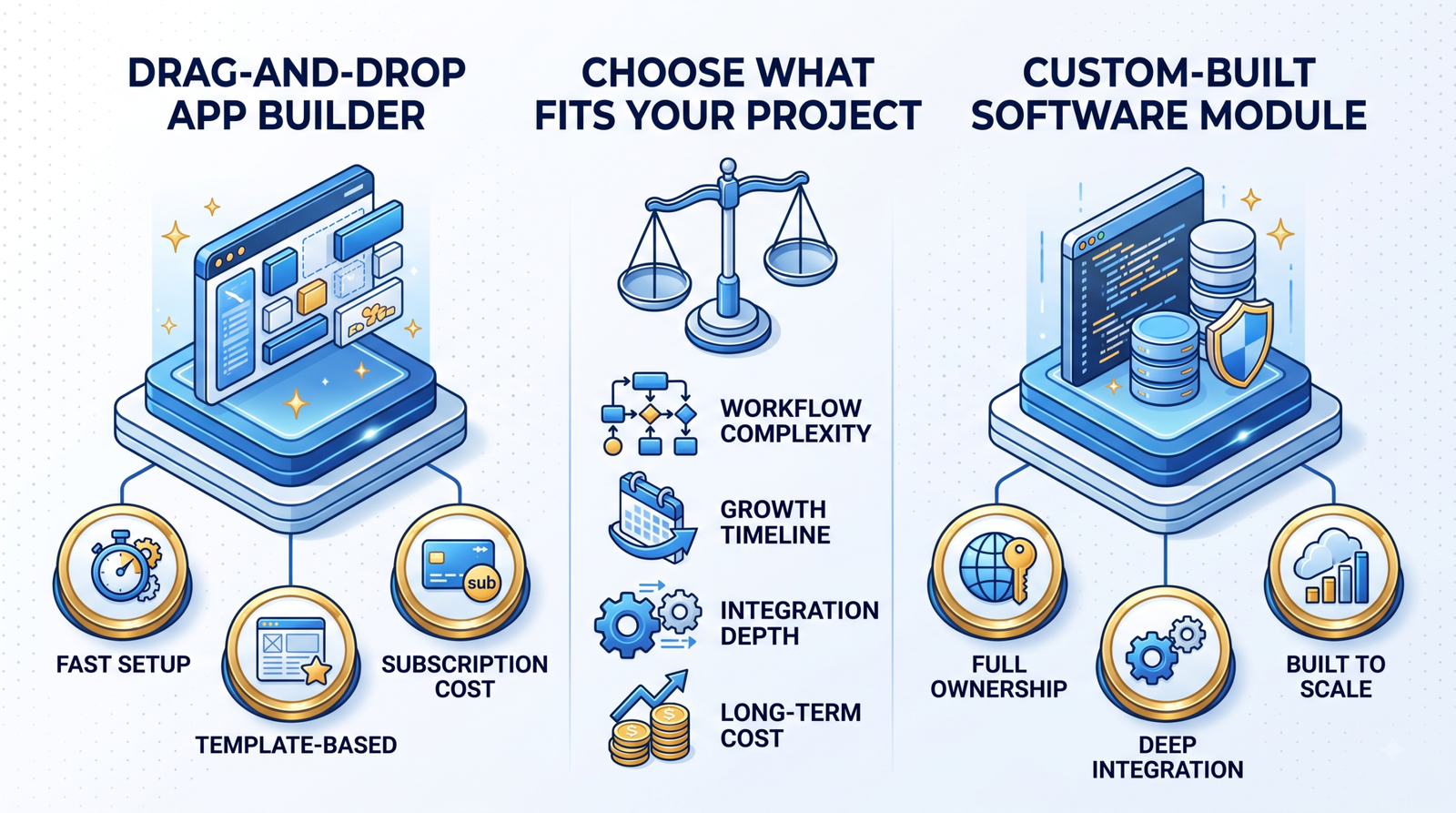
Low-code looks cheaper at launch because there is less code to write and less time spent building. That comparison changes once a business accounts for what happens after launch.
Custom development costs more upfront but produces something the business fully owns, with no platform subscription that scales with usage, no arbitrary customization ceiling, and no risk of the vendor changing pricing or shutting down a feature the whole workflow depends on. For a tool that will run for years and touch core operations, that ownership often costs less over the app’s lifetime, even though the sticker price at launch is higher.
How to Tell Which One Your Project Needs
The decision usually comes down to a few honest questions: How standard is the workflow? How much will it need to change over the next two years? How deeply does it need to integrate with other systems? How much does performance and scale matter as usage grows?
A simple internal approval form for a ten-person team is a reasonable low-code candidate. A customer-facing platform that needs to integrate with your inventory, payments, and CRM, and that you plan to keep building on for years, usually belongs in custom software solutions territory from the start, alongside solid UX/UI design from day one.
If you’re not sure which side of that line your project sits on, talk to our team, and we’ll walk through the tradeoffs for your specific case before you commit either way.
FAQ
Can a low-code app be migrated to custom code later?
Sometimes, but it’s rarely a clean lift. Migrations usually mean rebuilding significant parts of the logic, since low-code platforms structure data and workflows in ways that don’t map directly to custom code.
Is low-code always cheaper than custom development?
Only at launch. Subscription costs, customization limits, and scaling issues often make low-code more expensive over a few years for anything beyond a simple internal tool.
What size business is low-code best suited for?
Any size business can use low-code well for the right use case. It’s the complexity and longevity of the specific project that matters more than company size.
Can low-code and custom development work together in the same business?
Yes. Many businesses use low-code for simple internal tools while investing in custom development for customer-facing or revenue-critical systems.
The Right Choice Depends on What the Project Needs to Become
Low-code and custom development aren’t rivals, they solve different problems. The mistake isn’t picking low-code, it’s picking it for a project that was always going to outgrow it.
Innosaber helps businesses make that call before any code gets written, and builds custom software solutions for the projects that need real ownership and room to grow. Reach out to talk through what your next project actually needs.