
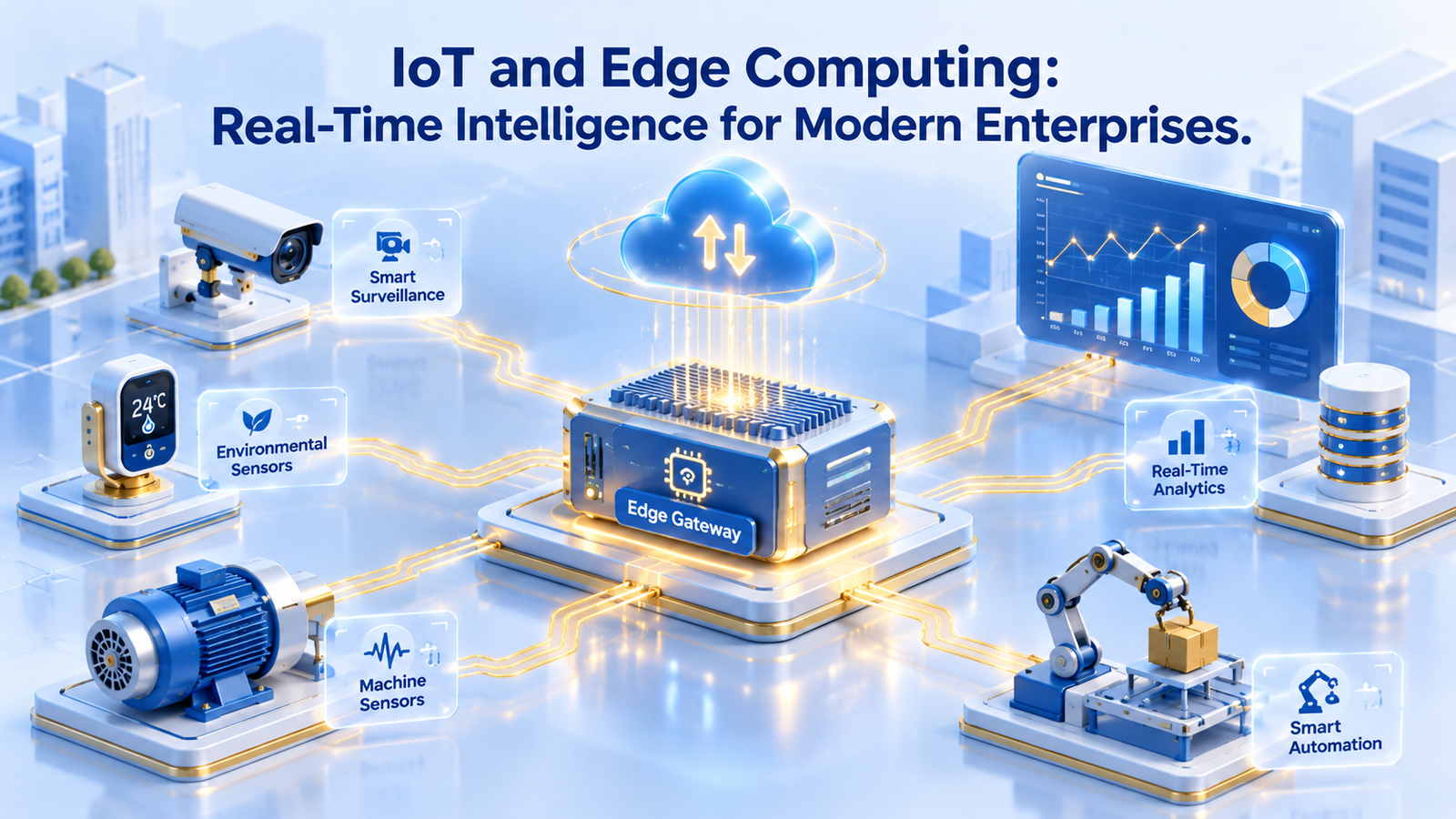
TL;DR: IoT devices generate data around the clock, and edge computing processes that data close to its source so your enterprise can act in milliseconds instead of waiting on a round trip to the cloud.
A sensor on a production line detects a fault. The data travels to a cloud data center, joins a queue, and returns with an instruction after analysis. By then, the line has produced more defective parts.
Delays like this explain why enterprises are moving computing closer to their devices. Edge computing processes data where it originates. Combined with IoT, it turns raw sensor streams into immediate decisions. This guide explains how the two fit together, where the value lies, and how to plan a first deployment.
What Is IoT, and Where Does Edge Computing Fit?
The Internet of Things, or IoT, describes physical devices that collect data and send it over a network. Sensors, cameras, meters, and machines all count. Each device produces readings continuously.
Edge computing places processing power near those devices. The edge might be a gateway in a factory, a small server in a store, or a computer inside a vehicle. It filters and analyzes data locally and sends only what matters to the cloud.
IoT supplies the senses and the edge supplies the reflexes. The cloud handles long-term analysis.
Why Sending Everything to the Cloud Stops Working
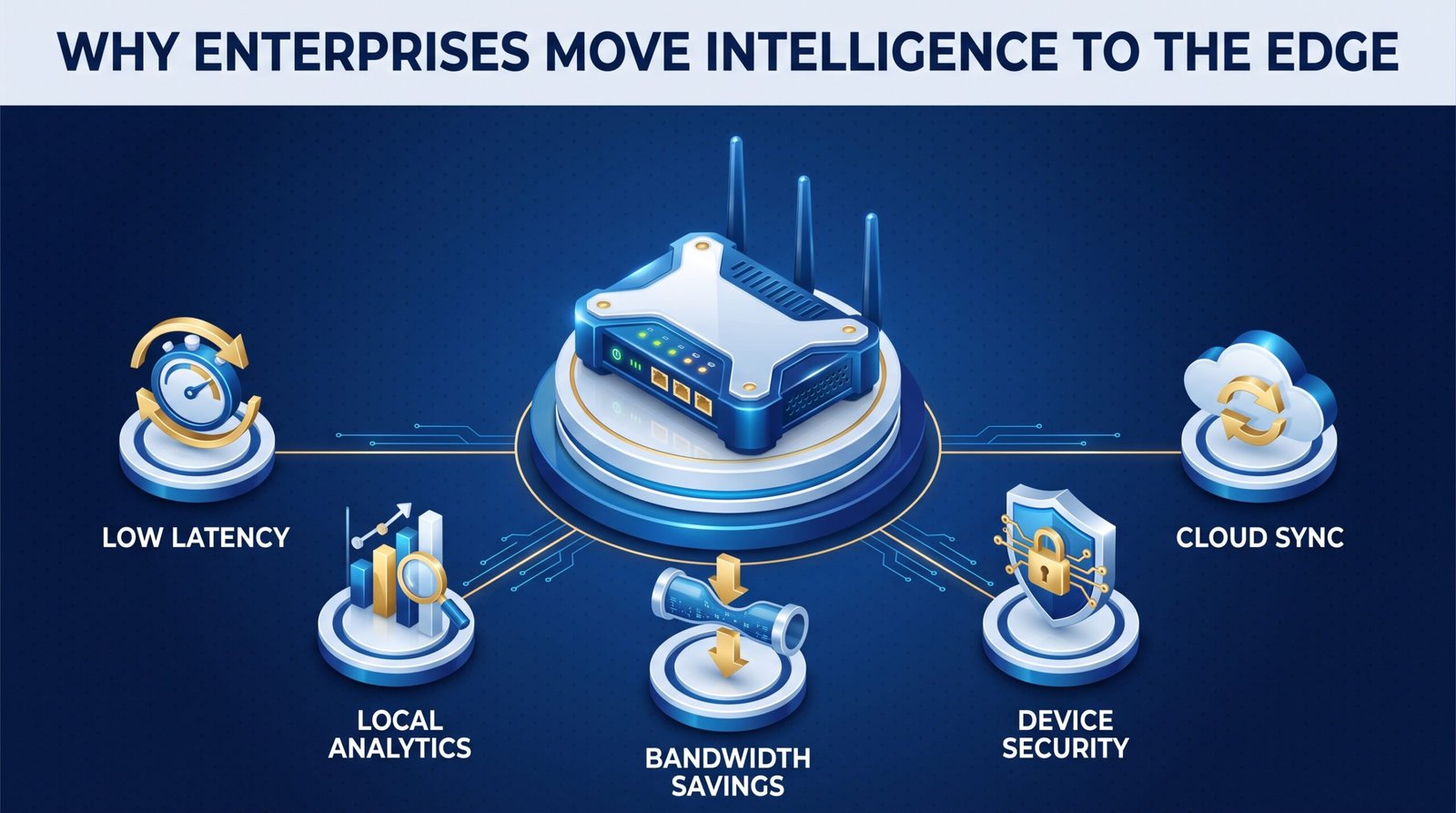
Cloud computing remains essential, but it struggles with certain workloads. Four limits show up repeatedly.
Latency. Every round trip to a distant data center takes time. For a safety shutdown or a quality inspection, even a short delay costs money or risks harm.
Bandwidth. A single camera can stream huge amounts of video. Multiply that by hundreds of devices and your network bill climbs fast. Edge filtering sends only useful data upstream.
Connectivity. Remote sites, ships, and mines lose network access regularly. An edge system keeps working when the link drops and syncs later.
Data rules. Some regulations restrict where data can travel. Processing locally can keep sensitive information inside a site or a country. Our cloud services team designs hybrid setups that use each layer for what it does best.
What Edge Computing Does Better
Edge computing shines where decisions must happen immediately and locally.
On a factory floor, a camera with an edge model can reject a defective part as it passes. In cold chain logistics, a gateway can trigger an alert the moment a freezer drifts out of range. In a retail store, local systems can adjust inventory counts without relying on a distant server. Energy companies use edge devices to balance load at substations in real time.
These examples share a pattern. A device collects data, a nearby system decides, and an action follows within moments. The cloud receives a summary for reporting and planning.
How Cloud and Edge Work Together
Edge does not replace the cloud. The two divide the work.
The cloud trains AI models using historical data from many sites. It then pushes those models to edge devices, which run them locally. The edge sends results and exceptions back, and the cloud uses them to improve the next version. Our artificial intelligence services team builds this loop for clients.
The cloud also manages your fleet. It tracks device health, rolls out updates, and holds the long-term record. Without central management, hundreds of edge devices turn into a maintenance burden. Reliable support matters here, and we cover that need in our guide on round-the-clock cloud support for uninterrupted operations.
Security Risks at the Edge
Edge deployments multiply the number of devices you must protect. Each device is a possible entry point, and many sit in unattended locations.
Start with device identity. Every device should prove who it is before it joins your network. Encrypt data in transit and at rest. Plan for secure, remote updates because you cannot send a technician to every site.
Apply zero trust principles. Treat every device and connection as untrusted until you verify it. Keep your IoT network separate from core business systems so a compromised sensor cannot reach your finance data.
Security should enter the design at the start, not after launch. Our cybersecurity services team reviews architectures and builds protections into edge projects.
How to Plan Your First Edge Deployment
Begin with a business problem, not a technology.
Choose a use case where delay or bandwidth clearly costs you money. Quantify that cost today. The number becomes your baseline for measuring success.
Next, define where each decision should happen. Time-critical decisions belong at the edge. Reporting and model training belong in the cloud.
Then build a small pilot at one site. Connect a limited set of devices, run your edge logic, and measure the result against your baseline. Fix problems at small scale before you expand.
Finally, plan for operations. Decide who monitors devices, who deploys updates, and how you handle failures. Many projects stall because nobody owns the long-term work.
Custom integration usually forms a large part of the effort, since devices, gateways, and business systems rarely speak the same language. Our custom software solutions and enterprise software solutions teams build that connective layer. If you want help scoping a pilot, talk to our team.
FAQ
What is the difference between IoT and edge computing?
IoT refers to connected devices that collect data. Edge computing refers to processing that data near the devices instead of in a distant cloud.
Does edge computing replace cloud computing?
No. The edge handles fast, local decisions, and the cloud handles training, storage, and fleet management. Most enterprises use both.
Which industries benefit most from edge computing?
Manufacturing, logistics, retail, energy, and healthcare benefit most because their operations depend on real-time decisions near physical equipment.
Is edge computing secure?
It can be, but it widens your attack surface. Strong device identity, encryption, network separation, and remote updates reduce the risk.
Decide Where Your Data Thinks
IoT and edge computing give enterprises a practical way to act on data while it still matters. The edge delivers speed and resilience, and the cloud delivers scale and learning.
The strongest designs put each decision where it belongs. We help you map those decisions, secure the devices, and connect everything to your existing systems.
Contact Innosaber to scope a pilot that proves the value before you scale.
