
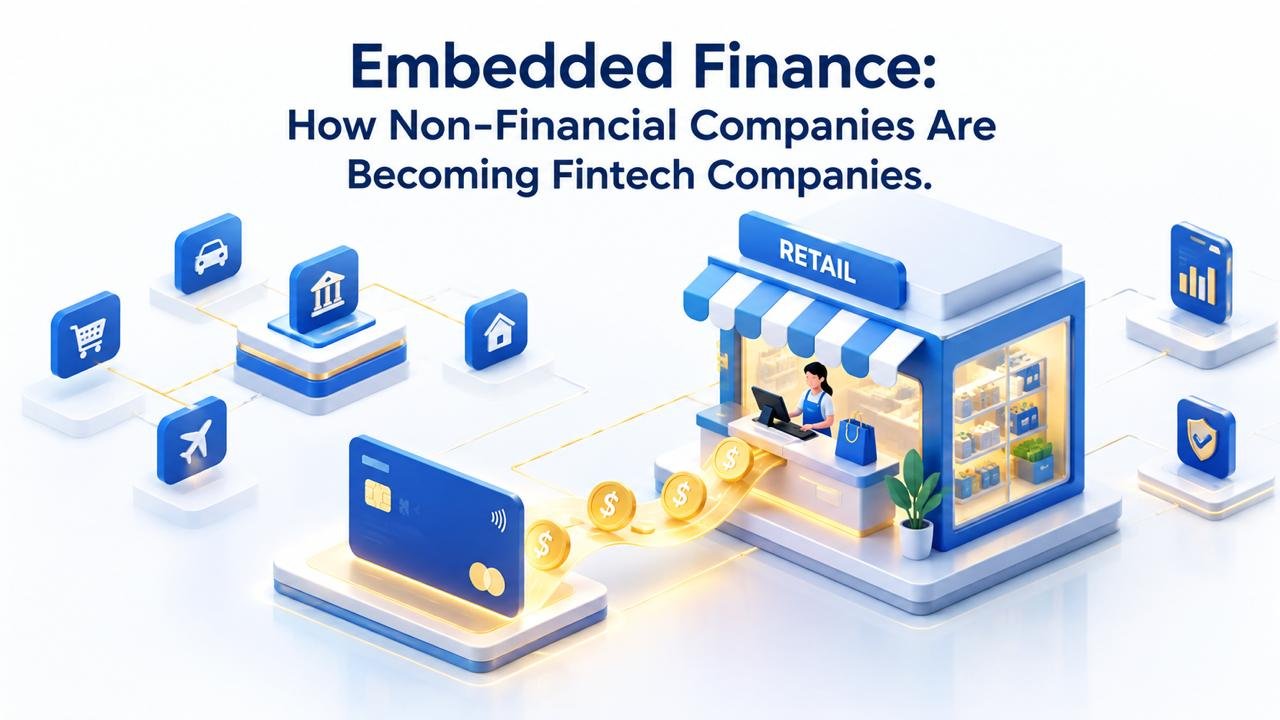
TL;DR: Embedded finance lets a non-financial company offer payments, lending, insurance or accounts inside its own product through partner APIs, so it earns new revenue without becoming a bank.
A ride-hailing app pays its drivers the moment a trip ends. A furniture retailer splits a sofa into monthly payments at checkout. A software platform hands each customer a business account. None of these companies is a bank, yet each one now runs a financial product.
We call this shift embedded finance, and it changes how businesses earn money from customers they already serve. In this article, we explain how embedded finance works and why non-financial companies adopt it. We also cover what the software behind it demands and where teams get into trouble.
What Embedded Finance Actually Means
Embedded finance places a financial service inside a product that people already use for something else. The customer never visits a bank or fills out a separate application. The service appears at the moment of need, inside the checkout page or the invoicing tool.
In most cases, the company behind the product holds no banking licence. A licensed partner, often called a banking-as-a-service provider, runs the regulated core. The company connects to that partner through APIs and designs the customer experience on top. This split lets a retailer or a software vendor launch a financial product in months rather than years.
Where You Already See Embedded Finance
E-commerce platforms advance working capital to merchants based on their sales history. Delivery and ride-hailing apps let workers cash out earnings the same day. Retailers offer buy now, pay later plans at checkout, and software vendors give customers invoicing tools with built-in payment accounts.
Each example follows the same pattern. The company already knows its customer, already sees the customer’s activity, and already owns the moment when money changes hands.
Why Non-Financial Companies Are Moving In
Financial services generate revenue that product sales alone cannot match. Interchange fees on card spending and interest on loans both add margin to an existing customer relationship.
Retention improves as well. A customer who holds a business account inside your platform has a strong reason to stay. Switching means moving payroll and reporting to another tool.
Data adds a further advantage. Your platform already knows how each customer behaves, so you can price credit or insurance more accurately than a distant lender can.
The Main Embedded Finance Products
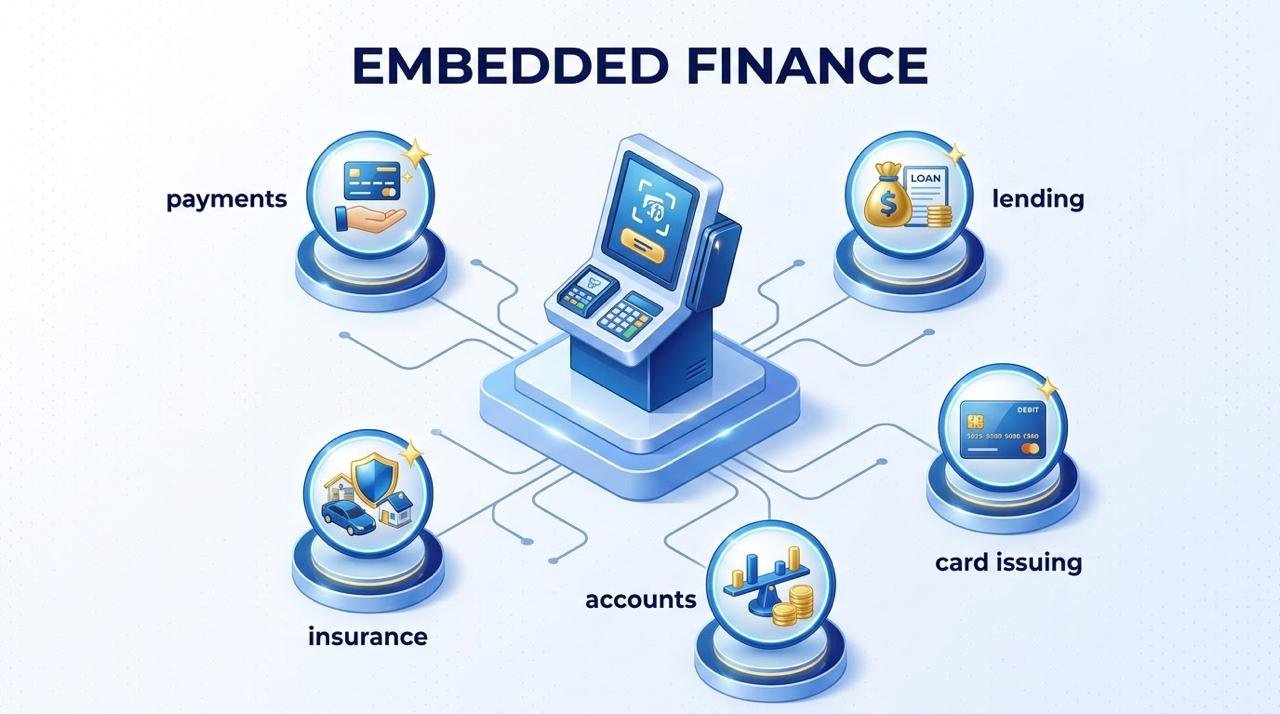
Five product types account for most launches.
- Embedded payments: the platform accepts and routes money directly instead of sending customers to a third-party checkout.
- Embedded lending: buy now, pay later options and working capital advances appear at the point of need.
- Embedded insurance: the platform sells coverage alongside the product it protects, such as a device or a trip.
- Embedded accounts: wallets and business accounts live inside the platform.
- Card issuing: the platform issues branded cards to its customers or its own staff.
Most companies start with payments and add a second product after the first one proves itself.
What the Software Behind It Demands
The customer sees one smooth screen. Behind it, your software exchanges data with a banking partner and an identity verification service. It often talks to a payment processor as well. Four concerns shape the architecture.
- Ledger accuracy: every movement of money needs a record that reconciles to the cent with your partner’s records.
- Reliability: a payment that fails halfway must roll back or retry safely, so we design idempotent operations and clear failure states.
- Security: card and identity data require encryption and strict access controls, and every action needs an audit log.
- Compliance hooks: identity checks and transaction monitoring must run in-flow, not after.
General-purpose plugins rarely cover these needs. Teams that get embedded finance right usually invest in custom software solutions built around their own product logic. Because customers often manage these products from a phone, many teams also pair the platform with mobile app development.
Risks to Plan For
Regulation follows the money, not the company type. Your partner’s licence covers the regulated core, but you still carry duties for customer disclosures and complaints handling.
Dependency creates a second risk. If your banking partner changes its terms or exits the market, your product stops working. We recommend a design that lets you swap partners without rewriting your application.
Fraud adds a further risk. Instant payouts and new accounts attract abuse, so you need fraud checks in the sign-up and payout flows from day one. Our cybersecurity services cover that hardening work.
How to Start Without Overbuilding
Pick one product that fits an existing customer pain point. A marketplace with slow seller payouts should start with faster payouts. A subscription platform with failed card payments should start with better payment recovery.
Choose a partner with clear API documentation and a sandbox, then build a thin slice of the product for a small group of customers. Measure adoption and fraud before you widen the rollout.
Keep your data model flexible. Financial products change quickly, and rigid schemas turn each new feature into a migration project.
Ready to add a financial product to your platform? Our team can design the architecture and build it with you. Talk to Innosaber about your embedded finance roadmap.
FAQ
Do we need a banking licence to offer embedded finance?
Usually no. A licensed partner holds the licence and runs the regulated core, while you build the customer experience through APIs. You still carry duties for disclosures and data protection, so check the rules in each market you serve.
How long does an embedded finance launch take?
A focused first product often reaches a pilot within three to six months. Timelines depend more on partner onboarding and compliance review than on code.
Which embedded finance product should we launch first?
Start with payments. They fit an existing flow and give you data that supports lending or accounts later.
What does embedded finance cost to build?
Cost depends on scope, partner fees, and compliance work. A single-product pilot costs far less than a full multi-product platform, so a phased plan keeps risk low.
Your Product Already Owns the Customer. Now Own the Transaction.
Embedded finance turns a software product or a retail brand into a financial platform without a banking licence. Partners run the regulated core, and you shape the experience that customers see.
The opportunity is real, and so are the demands. Ledgers must reconcile, integrations must survive failure, and security and compliance must sit inside the flow. Teams that plan for these needs early ship faster and avoid costly rewrites. If you want to add payments or accounts to your product, we can help you design and build it. Contact Innosaber to start the conversation.
