
TL;DR: Embedded finance lets a non-financial company offer payments, lending, insurance or accounts inside its own product through partner APIs, so it earns new revenue without becoming a bank.
Compliance teams at fintech companies review thousands of alerts and file recurring reports every month. Regulators keep adding rules, and transaction volumes keep growing. Hiring more analysts stops working at some point.
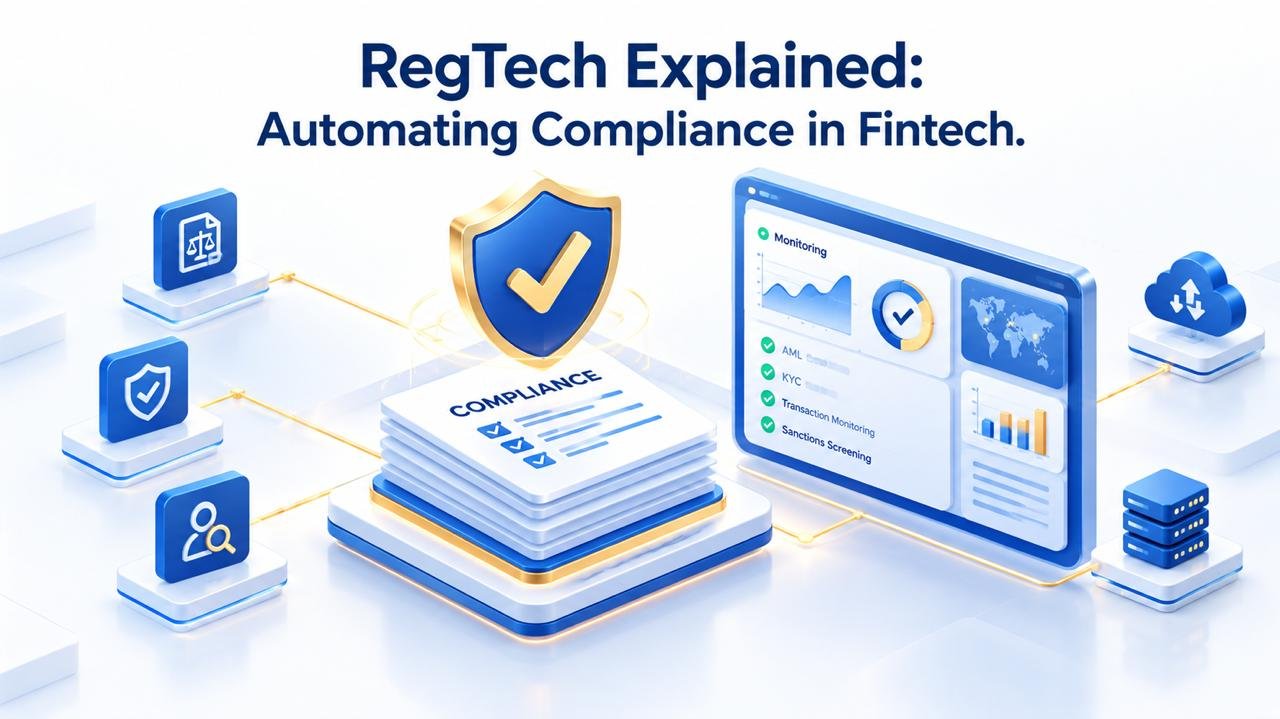
RegTech, short for regulatory technology, offers a different path. In this article, we explain what RegTech does and how its core tools work. We also show how to build compliance automation into your fintech product.
What RegTech Means
RegTech applies software to regulatory work. It automates checks that people once ran by hand, and it monitors activity continuously instead of sampling it after the fact. Fintechs adopt it because they operate in regulated markets with lean teams.
The term covers off-the-shelf vendors and custom-built systems. Most companies end up with a mix: vendor tools handle standard checks, and custom software handles the rules unique to their product.
Core RegTech Capabilities
Five capabilities cover most compliance workloads.
- KYC and AML checks: systems verify identity documents and screen customers against sanctions lists at onboarding.
- Transaction monitoring: rules and machine learning models scan payments for patterns that suggest money laundering or fraud, then raise alerts for review.
- Regulatory reporting: the system collects data from across your platform and assembles filings in the format a regulator requires.
- Audit trails: every decision and override gets a time-stamped record, so you can answer an auditor in minutes instead of weeks.
- Risk scoring: models weigh customer and transaction data to give each account a risk rating that updates over time.
How AI Changes Compliance Work
Traditional rules-based monitoring generates many false alerts. Analysts spend hours clearing transactions that were never suspicious. Machine learning models learn from past analyst decisions and rank alerts by likelihood, so reviewers see the risky cases first.
Large language models now help with document-heavy work. They summarise adverse media and draft case notes for a human to approve. Our artificial intelligence services and our guide to GPT in custom software show how teams put these models to work.
Keep humans in the loop. Regulators expect you to explain why the system flagged or cleared a customer, so choose models and designs that produce clear reasons.
Build, Buy or Combine
Vendors offer strong coverage for standard tasks. Identity verification and sanctions screening are mature markets, and building them from scratch rarely pays off.
Custom work makes sense where your product differs from the norm. A lender with unusual credit products or a payments company operating across several corridors needs rules that no vendor ships out of the box. In those cases, custom software solutions let you encode your own policies and connect every vendor into one workflow.
Whichever route you take, insist on open APIs. Closed tools trap your data and make later changes expensive.
Architecture Principles for Compliance Automation
- Build compliance as a service inside your platform. Onboarding, payment, and lending flows should call it in real time instead of relying on a separate back-office tool.
- Store an immutable event log. Regulators ask what you knew and when you knew it.
- Version your rules. When a threshold changes, you must show which rule applied to which transaction.
- Protect the data. Compliance systems hold sensitive personal and financial records, so they need tight access control and strong encryption. Our cybersecurity services address this directly.
- Design for change. Rules shift often, so keep them in configuration that compliance staff can review instead of burying them in code.
Where to Start
Map your obligations first. List each regulation that applies and the data and deadlines it sets. Then rank your manual tasks by hours spent and error risk.
Automate the highest-volume task first, which is usually onboarding checks or alert triage. Measure the false positive rate and the review time before and after. Those numbers make the case for the next phase.
Need a compliance system that fits your product? We build custom RegTech workflows around your rules and your stack. Talk to Innosaber about your compliance automation.

FAQ
What is the difference between RegTech and fintech?
Fintech delivers financial services through technology. RegTech delivers compliance tools that help regulated companies, including fintechs, meet their legal duties.
Can RegTech replace a compliance team?
No. It removes repetitive work and surfaces risk sooner, but people still make judgment calls and answer to regulators.
How much does RegTech automation cost?
Cost depends on transaction volume, the number of regulations, and whether you buy or build. Vendor tools charge by usage, while custom builds need an upfront investment that pays back through lower review costs.
Do regulators accept AI-based monitoring?
Many regulators accept it when you can explain the outputs, test the models, and keep humans in the review process. Confirm expectations with your regulator before launch.
Compliance Should Run in the Background, Not Block the Roadmap
RegTech moves compliance from a manual burden to an automated part of your product. Identity checks and monitoring run continuously, and your team focuses on the cases that need judgment.
The best results come from a clear map of your obligations, a sensible mix of vendors and custom software, and an architecture that logs every decision. Start with one high-volume task, measure the gain and expand from there.
We build compliance automation for fintech teams that want to grow safely. Contact Innosaber to plan yours.
