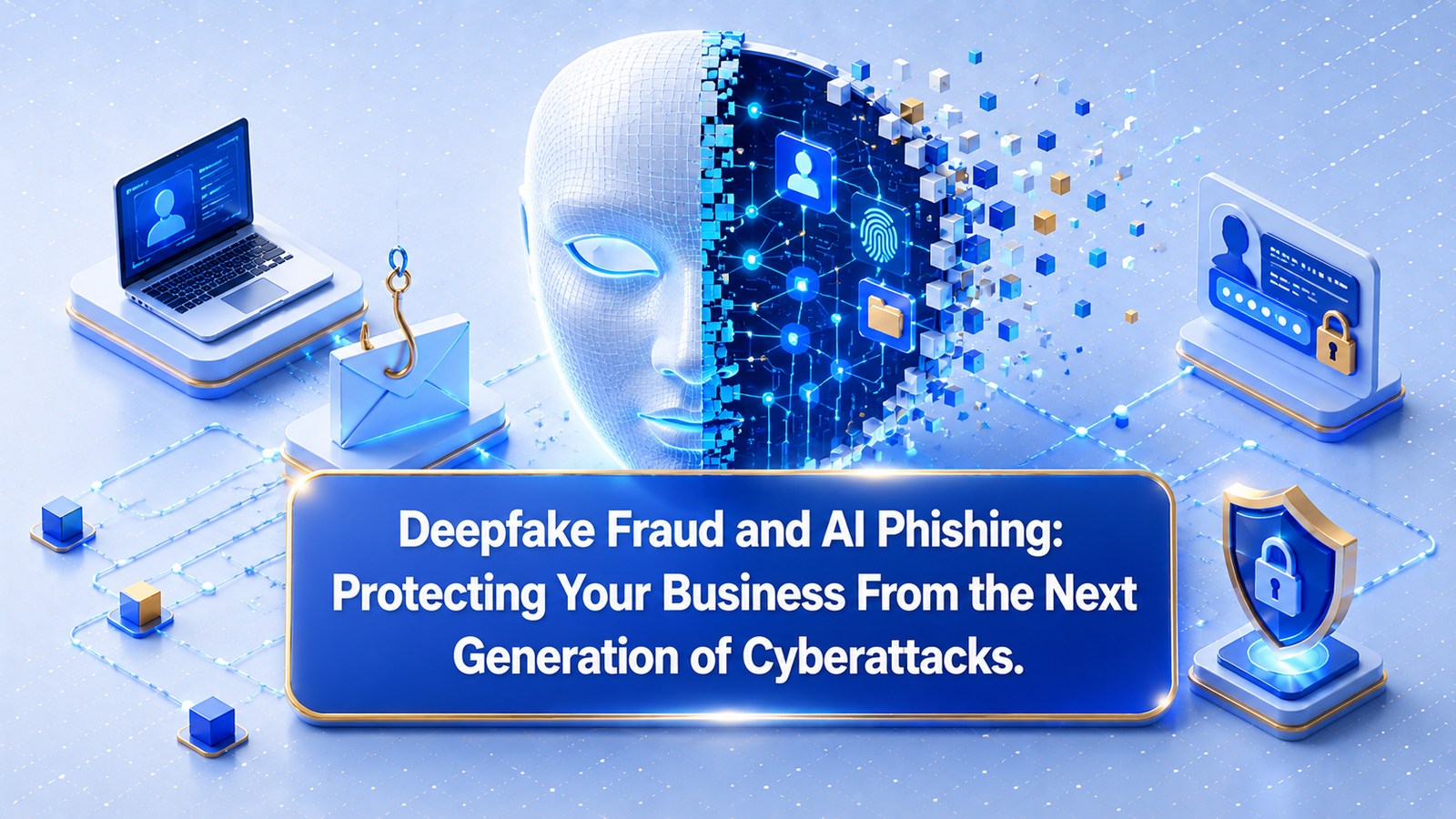
TL;DR: Deepfake fraud and AI phishing use generative AI to impersonate real people convincingly, and defending against them requires new verification habits, not just traditional spam filters.
A finance employee receives a video call from someone who looks and sounds exactly like the company’s CFO, asking for an urgent wire transfer. The call is not real. It is a deepfake, built from a few minutes of public video footage, and businesses across every industry are now facing this exact scenario. Generative AI has made impersonation cheap and convincing enough that traditional fraud training, built around spotting a badly worded email, no longer covers the threat businesses actually face.
How Deepfake Fraud Actually Works
Modern deepfake tools need only a short video or audio sample, often pulled from a public earnings call, a conference talk, or a social media post, to generate a convincing fake in someone’s voice or likeness. Fraudsters use these fakes to impersonate executives on video calls or leave fake voicemails authorizing a payment, and in more advanced cases, join a live call and answer questions in real time. The barrier to entry has dropped so far that this kind of attack no longer requires a sophisticated criminal operation.
Why AI Phishing Beats Traditional Spam Filters
Older phishing emails were often easy to catch: awkward phrasing and generic greetings, or an obvious spelling error tucked into an otherwise plausible message. AI-generated phishing removes almost all of those signals, producing messages that match a company’s actual tone and reference real internal projects, personalized to the specific target. Spam filters trained to catch old patterns increasingly miss messages that read exactly like an email a real colleague would send.
Verification Habits That Actually Stop Impersonation
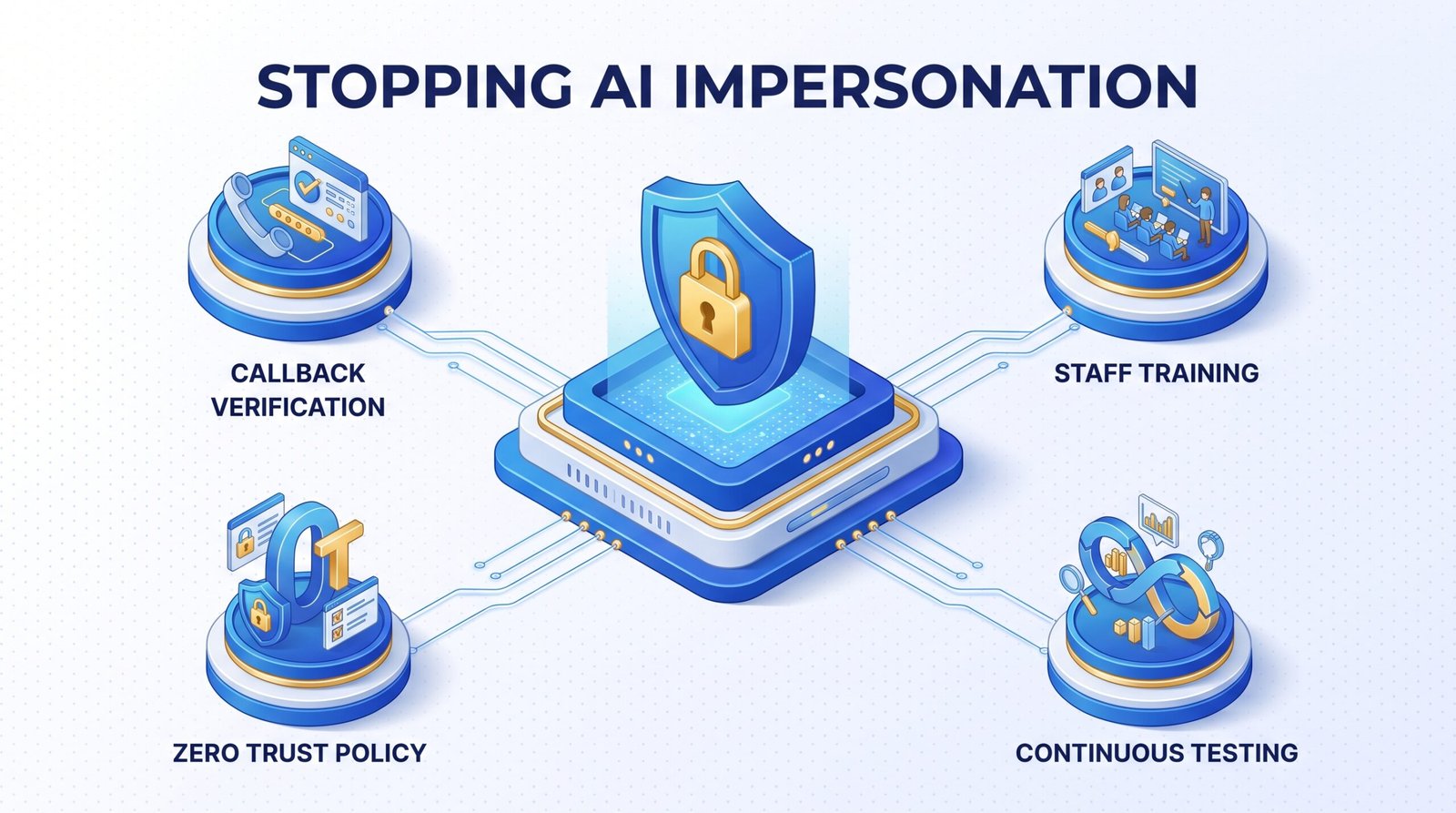
Technology alone cannot fully solve a problem built on convincing human deception. Businesses that hold up well against deepfake fraud build a verification step into any high-value request, such as a callback to a known phone number before approving a wire transfer, regardless of how convincing the original request looked or sounded. A policy that treats urgency itself as a warning sign, rather than a reason to skip verification, closes the exact gap that these attacks are designed to exploit.
Where Zero Trust Principles Apply to Human Communication
Zero trust security usually gets discussed in terms of network access and system permissions, but the same never trust, always verify principle applies directly to unexpected high-stakes requests, even ones that appear to come from a known executive. Building that verification step into standard operating procedure, rather than treating it as an exception, keeps a single convincing deepfake from bypassing a business’s entire financial control process.
Building a Business That’s Actually Ready
Preparing for deepfake fraud and AI phishing starts with training staff on what these attacks actually look like today, not the outdated examples most fraud training still uses. From there, building callback verification into financial approval processes and running periodic tests to see how staff actually respond under pressure closes the gap between policy and practice. Our cybersecurity services team helps businesses build these controls into existing workflows without slowing down legitimate requests. Talk to our team about strengthening your defenses.
FAQ
Can deepfakes fool employees?
Yes. Current tools can produce a highly convincing fake from just a few minutes of public audio or video, which is often all a public figure’s earnings calls or interviews provide.
Do traditional spam filters catch AI-generated phishing?
Not reliably. AI-generated phishing avoids the awkward phrasing and generic patterns that older filters are trained to catch.
What’s the best defense against deepfake fraud?
A callback verification step for any high-value request, made through a separately confirmed phone number rather than replying to the original call or message.
Is this only a risk for large companies with public executives?
No. Any employee with public video or audio, including a LinkedIn video or a conference recording, can potentially be impersonated, which makes this a risk at any company size.
Trust the Process, Not the Voice on the Call
Deepfake fraud and AI phishing work because they exploit trust built on how a request looks and sounds, and generative AI has made both of those signals unreliable.
A verification process that treats every high-value request the same way, no matter how convincing or urgent it appears, closes the gap that these attacks depend on.
Ready to pressure-test your business’s defenses? Contact our team.