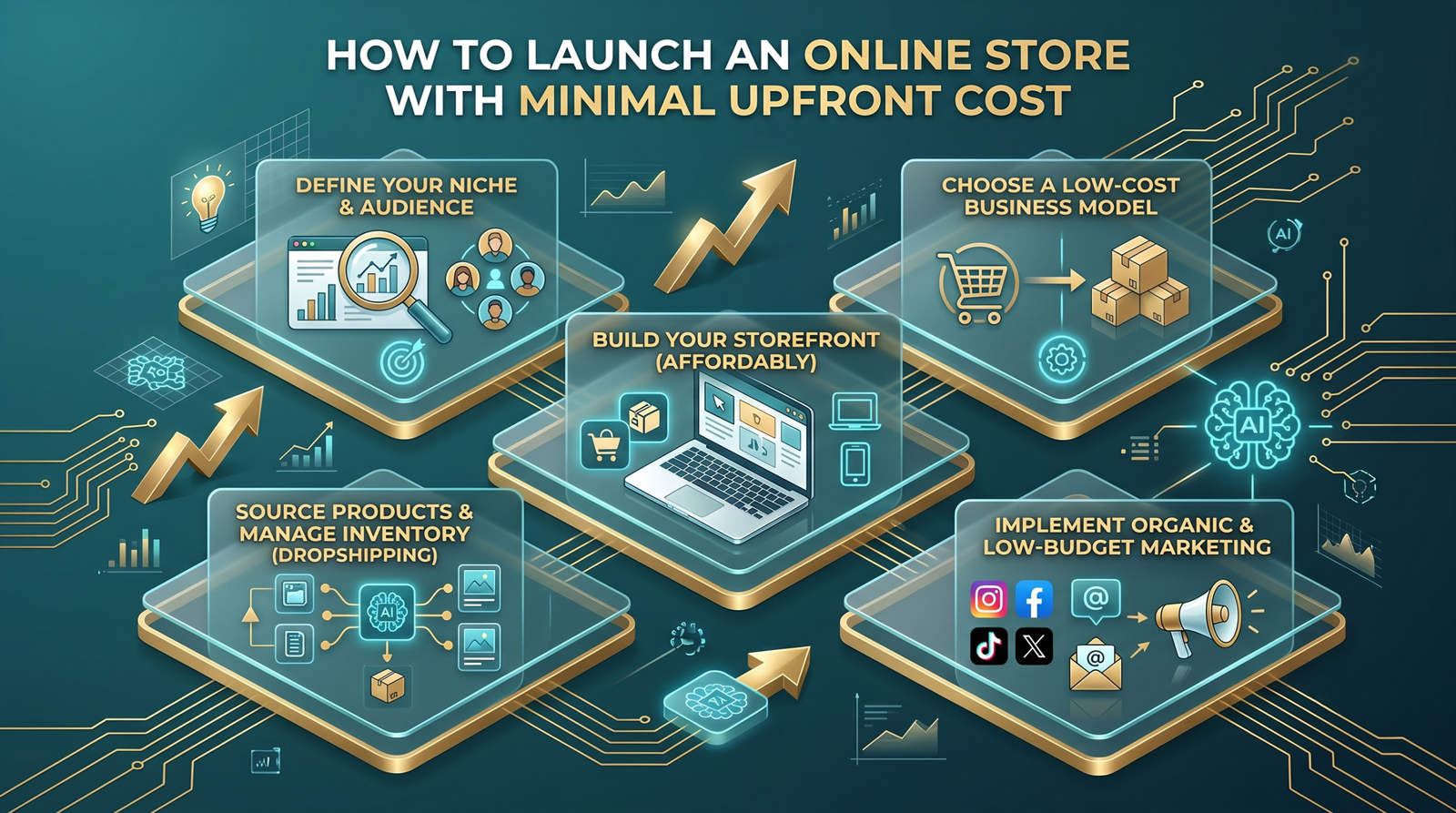
Most people who want to sell online think they need a big budget before they can start. That is rarely true. The cost of getting an online store live has dropped significantly over the past decade, and with the right approach, you can launch something real without spending a fortune upfront. The challenge is knowing which corners are safe to cut and which ones will cost you later.
Start with the Right Platform
The platform you choose shapes almost every other decision. For most small businesses starting, hosted platforms like Shopify or WooCommerce on WordPress offer the fastest path to launch without heavy development costs. You get payment processing, inventory management, and a storefront without building any of it from scratch. WooCommerce in particular suits businesses that want more control over their site without paying monthly platform fees.
If you already have a product with strong demand and you know you will eventually need custom features, a bespoke e-commerce build is worth planning for, even if you start on a hosted solution first. The key is not to over-engineer your first version.
Keep Your Tech Stack Lean
New store owners often make the mistake of adding too many tools before they have customers to justify them. You do not need a complex CRM, a loyalty programme, and an abandoned cart recovery tool on day one. Start with the basics: a clean storefront, a reliable payment gateway, and a way to manage orders. Add more when the data tells you to.
At Innosaber, we have worked with businesses across retail and wholesale who launched lean, validated demand, and then brought us in to build a proper custom web platform once they knew what their customers actually needed. That sequence works far better than the other way around.
Use Free and Low-Cost Design Resources
Your store does not need a custom-designed theme to make sales. Most modern e-commerce platforms offer free or low-cost themes that are clean, mobile-responsive, and fast. Canva handles product graphics, banners, and social assets without needing a designer. Free stock photography from Unsplash or Pexels covers most product lifestyle imagery when you do not have your own photos yet.
Where design does matter is in the user experience. A store that is confusing to navigate, slow to load, or difficult to check out on mobile will lose customers regardless of how pretty it looks. Good UX design is not about aesthetics. It is about removing friction from the path to purchase.
Choose Suppliers and Fulfilment Carefully
Inventory is where many new store owners tie up cash unnecessarily. Dropshipping and print-on-demand models let you sell without holding stock. For physical products you produce or source yourself, start with small quantities and reinvest as you grow. The goal in the early months is to learn, not to hold warehouses full of product.
Third-party logistics providers can handle pick, pack, and dispatch once you have enough order volume to make it worth outsourcing. Until then, fulfilment from home or a small workspace keeps your fixed costs down.
Prioritise Organic Traffic from Day One
Paid ads are expensive, and the results stop the moment you stop spending. Organic search traffic compounds over time and costs nothing beyond the effort of producing good content. Publishing product guides, category pages with real explanatory text, and answers to questions your customers are already asking on Google builds traffic that keeps working long after you publish.
Social media handles community-building and product discovery well in the early stages, particularly Instagram and TikTok for product-based businesses. You do not need a paid social budget to get your first hundred customers.
When to Bring in Professional Help
DIY works well up to a point. When your store starts generating consistent revenue, and you need custom integrations, a more scalable infrastructure, or a proper mobile app to serve your customers better, that is when it makes sense to work with a development partner. Building too early is expensive. Building too late leaves money on the table.
Innosaber works with businesses at that inflection point. We have over 20 years of experience building custom software solutions for companies that have outgrown what off-the-shelf platforms can offer. If you are at that stage, we are happy to talk.
FAQ
How much does it actually cost to launch an online store?
With a hosted platform like WooCommerce or Shopify, you can get a functional store live for a few hundred dollars, covering hosting, a domain, a theme, and a payment gateway. Costs vary depending on whether you need custom development, photography, or advertising.
Do I need a developer to start?
Not necessarily. Hosted e-commerce platforms are designed for non-developers. You will need a developer when you need custom functionality, integrations with third-party systems, or a platform
that can handle significant scale.
Is dropshipping a good model for minimising upfront costs?
It depends on your product category and margins. Dropshipping keeps inventory costs to zero but typically means lower margins and less control over fulfilment quality. It works best as a way to test demand before committing to stock.
How long does it take to get an online store live?
A basic store on a hosted platform can go live in a week or two if you have your product information, pricing, and payment details ready. A custom-built platform takes longer but gives you far more flexibility as you scale.
How long does it take to get an online store live?
Spending money on things that do not affect sales: complex tools they do not use yet, expensive themes, or paid ads before they understand their customer. Get your first customers organically. Learn what they need, then invest in what the data tells you to.
The right platform for your store, built properly
Choosing the wrong platform costs more to fix than choosing the right one costs upfront. A store that outgrows its platform needs a rebuild. One that was over-engineered for its actual requirements wastes development budget and creates ongoing maintenance overhead that was never necessary.
At Innosaber, we build e-commerce stores on Shopify, WooCommerce, Magento 2, BigCommerce, and custom stacks. Every recommendation starts with understanding the business: the products, the team, the integrations, and the growth plan. If you are planning an e-commerce build and want a straightforward view of which platform fits your situation, book a consultation, and we will walk through it with you.