TL;DR: ERP implementations fail when businesses skip proper process mapping, data cleanup, internal ownership, and user training, causing delays, budget overruns, and poor adoption.
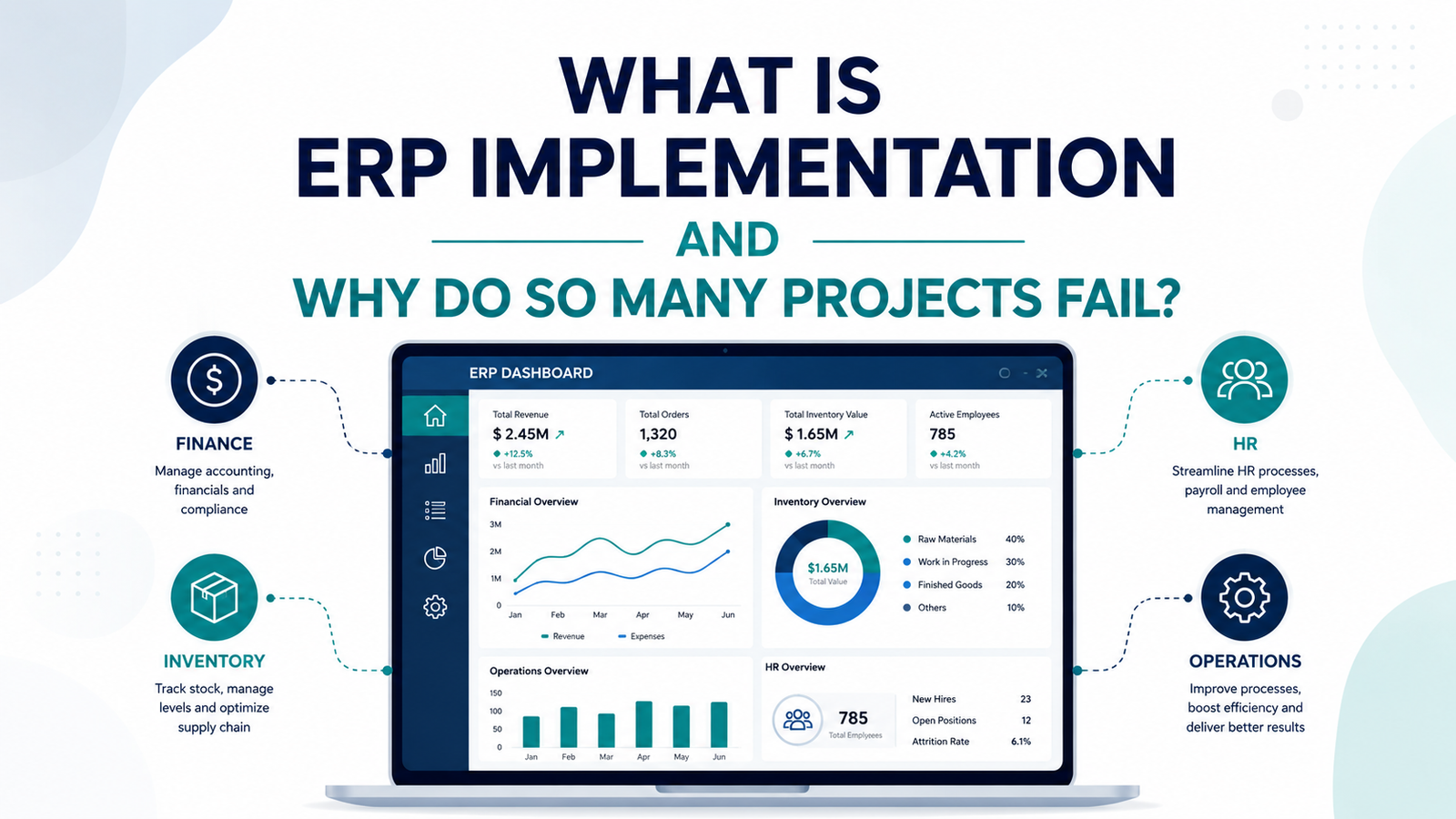
ERP implementation is the process of installing, configuring, and rolling out an enterprise resource planning system across a business. It replaces scattered spreadsheets and disconnected tools with one system that handles finance, inventory, HR, and operations together.
Most companies start an ERP project expecting smoother operations and faster reporting. Many end up over budget, behind schedule, or stuck with a system nobody wants to use. Independent studies report ERP failure rates of 50 to 75 percent, depending on how you define failure.
What ERP Implementation Actually Involves
ERP implementation covers more than installing software. It includes mapping current processes, cleaning up old data, configuring the system to match how the business actually works, migrating records, testing, and training every team that touches it.
A custom software layer usually sits alongside standard ERP modules. Most businesses have at least one process that doesn’t fit a template. Manufacturing companies often need custom inventory rules. Service businesses need custom billing logic.
The timeline varies by company size. A small business can roll out a lean ERP system in three months. A mid-sized company with multiple locations and old legacy systems can take a year or longer.
The Real Reasons ERP Projects Fail
Most ERP failures trace back to decisions made before anyone writes a line of configuration.
Teams skip proper process mapping and configure the system around guesses. They discover the mismatches only after go-live, when fixing them costs more and disrupts daily work.
Data migration often gets treated as an afterthought. Old records carry errors, duplicates, and inconsistent formats. Nobody cleans this up before the move, so the new system inherits the same mess with a nicer interface.
Budgets tighten as projects run long, and companies cut training first. Staff open a new set of screens with no context and drift back to old spreadsheets within weeks.
Companies also try to customize every module to match old habits instead of adjusting a few internal processes to fit the system. Heavy customization slows the project and makes future upgrades harder.
Many businesses also hand the entire rollout to a vendor and step back. Without a clear owner inside the company, decisions stall and scope drifts.
How to Reduce the Risk of Failure
Successful ERP rollouts share a few habits.
They map current processes honestly before configuring anything, including the messy exceptions nobody likes to admit exist.
They clean and validate data early, months before the actual migration, not the week before go-live.
They assign an internal project owner who has real authority to push back on vendor recommendations that don’t fit the business.
They also resist the urge to customize every screen. A cloud-based ERP setup with standard configuration, adjusted only where it truly matters, stays easier to maintain and upgrade over time.
Getting ERP Implementation Right the First Time
ERP implementation works best as a partnership, not a handoff. A team that understands both your industry and the technical side of the system can catch mismatches early, before they turn into rework.
Our enterprise software solutions team at Innosaber works alongside your staff through planning, configuration, migration, and training, so the system fits how your business actually runs. Get in touch to talk through your ERP plans before you commit to a vendor.
FAQ
How long does ERP implementation take?
Most small business rollouts take three to six months. Larger companies with multiple locations or legacy systems to migrate often need a year or longer.
What is the average cost of ERP implementation?
Cost depends heavily on company size, number of users, and how much customization the project needs. Licensing, data migration and training all add to the total, so a firm quote needs a proper scoping session.
Can a small business benefit from ERP implementation?
Yes. Smaller companies often see the fastest payoff, since moving off spreadsheets and disconnected tools removes manual work almost immediately.
What is the biggest cause of ERP project failure?
Weak process mapping combined with rushed or cut training. Both issues surface only after go-live, when they are far more expensive to fix.
ERP That Actually Works for Your Business
ERP implementation isn’t really about the software. It’s about whether your team still uses the system a year after go live.
The projects that fail usually skip the boring parts: honest process mapping, clean data, and real training. The projects that succeed treat those steps as the actual work, not overhead.
If you’re planning an ERP rollout and want a partner who stays involved after the contract is signed, reach out to Innosaber.