Most startups don’t fail because they had a bad idea. They fail because they built too much of it before finding out whether anyone wanted it.
MVP development is supposed to fix that problem. But in practice, many startups still overspend, overbuild, and end up with a product that took 8 months to launch and still missed the market. The issue usually isn’t the concept. It’s how the build was approached.
This is how we think about MVP development at Innosaber, based on working with early-stage companies across different industries and watching what actually works when the clock and budget are both running.
What an MVP Actually Is (and What It’s Not)
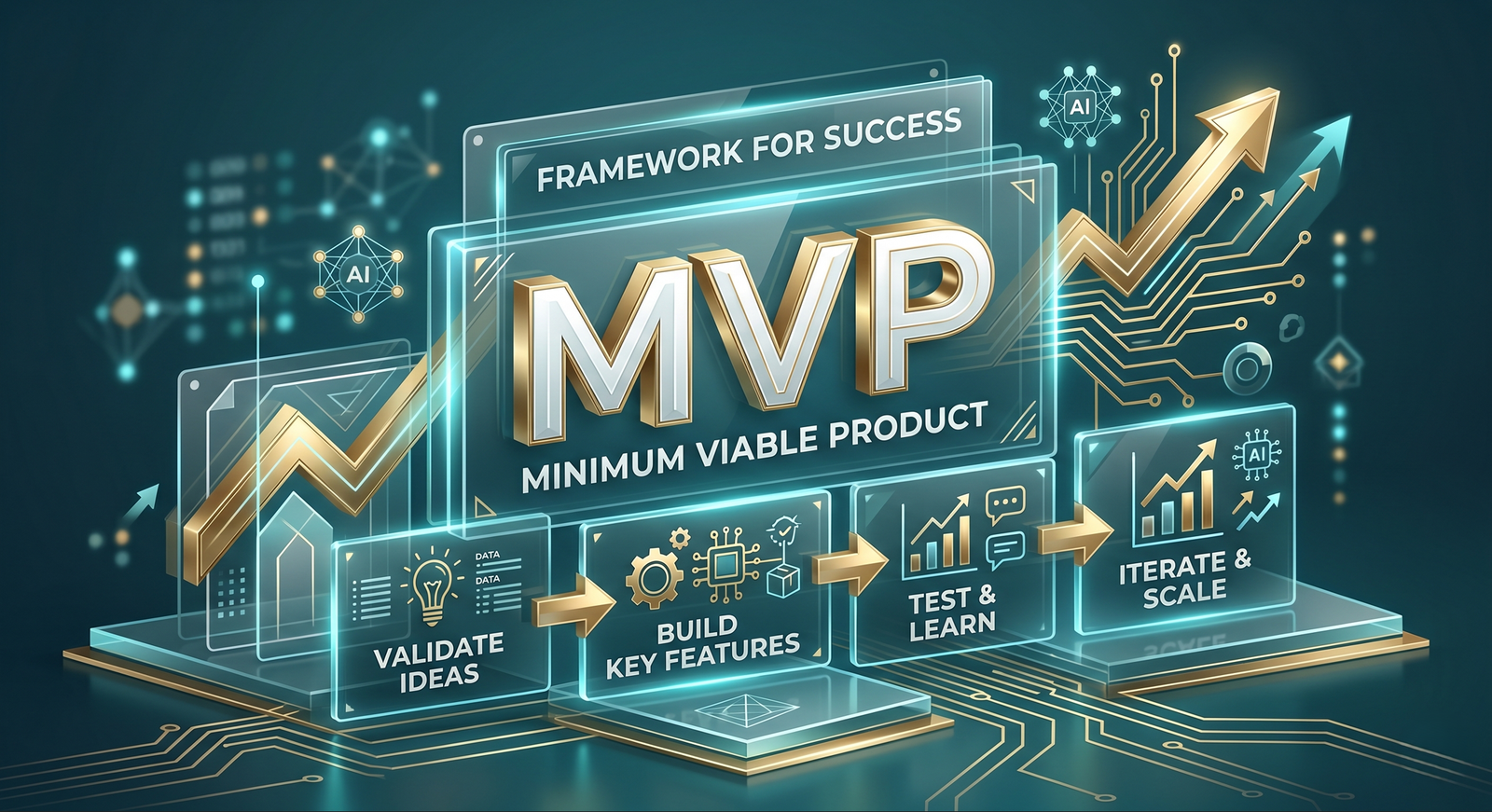
An MVP, minimum viable product, is the smallest version of your product that lets you test a core assumption with real users.
That last part matters. It’s not a demo. It’s not a prototype you show investors and never ship. It’s a working product that goes in front of real people, so you can learn whether the problem you’re solving is a problem they actually care about.
Where startups go wrong is treating “minimum” as a quality setting rather than a scope decision. A well-built MVP can have clean code, a solid database structure, and a user experience that doesn’t embarrass you. It just doesn’t have every feature. It has one or two features that test your core hypothesis, and nothing else.
The Business Problem: Why Startups Overbuild
There’s a pattern we see often. A founding team has an idea. They spend weeks mapping out features. By the time they sit down with a development partner, they have a 40-item backlog, three user roles, and an admin dashboard nobody will use for at least a year.
It happens because building feels productive. Every feature added feels like progress. But most of those features are assumptions, guesses about what users will need, and the only way to validate them is to ship something and watch what happens.
Overbuilding is expensive in two ways. The obvious one is cost. The less obvious one is time. Every extra feature delays your launch date, and every week you’re not in the market is a week you’re not learning.
How to Scope an MVP That’s Actually Minimal
The right way to scope an MVP is to start with the problem, not the product.
What is the one thing your target user needs to do that they can’t do well right now? Build that. Just that. Everything else is a phase 2 conversation.
At Innosaber, our process starts with a focused discovery session. We work through your business objectives, your core use case, and what “success” looks like for a first release. From that, we build a prioritised scope: features that must be in the MVP, features that can wait, and features that probably shouldn’t exist at all.
The questions we ask at this stage:
• What does the user need to do to get value from this product?
• What’s the minimum number of steps to get them there?
• Which features are assumptions, and which are requirements?
• What does the data or feedback from this release need to tell us?
That last question shapes everything. If you don’t know what you’re trying to learn, you can’t design an MVP that teaches you anything useful.
The Tech Decisions That Matter at the MVP Stage
A lot of startups make technology choices at the MVP stage that come back to bite them. The most common one is choosing a stack based on what the first developer knows, rather than what the product actually needs.
At Innosaber, we help startups make technology decisions based on three factors: speed to market, scalability as the product grows, and cost of maintenance. An MVP doesn’t need to be built for a million users on day one, but it does need to be built in a way that doesn’t require a full rewrite when you get to a hundred.
We also push hard on mobile responsiveness from the start. Most users will interact with your product on a phone before they ever open a laptop. If the experience isn’t solid there, your test data won’t reflect actual user behaviour. It’ll reflect the friction of a bad interface.
The other thing worth saying is that clean code at the MVP stage is not a luxury. It costs more to fix messy foundations than to build them right the first time. We’ve seen startups spend more on rewriting a 3-month MVP than they spent building it.
Phased MVP Development: A Better Approach
One approach that works well for startups with limited budgets is phased MVP development, releasing in stages rather than holding everything back until a “complete” version is ready.
Phase 1 is the core loop. The single flow a user needs to get value. Ship that, get it in front of users, and see what they do.
Phase 2 is informed by what Phase 1 taught you. Maybe users loved the core feature but couldn’t figure out how to get back to it. Maybe they wanted a notification. Maybe the thing you thought was essential turned out to be irrelevant. Phase 2 fixes the real problems, the ones you discovered, not the ones you assumed.
This approach keeps costs controlled, keeps the team focused, and produces a product shaped by real user behaviour rather than internal assumptions.
Our delivery model is built around this kind of iterative thinking. Sprint-based cycles, regular reviews, and a feedback loop that keeps the product moving in the right direction.
What a Good MVP Launch Looks Like
A good MVP launch isn’t the end of the process. It’s the beginning of a feedback loop.
Before launch, you should know:
• Who your first users are and how you’re getting them
• What you’re measuring and how
• What a successful result looks like versus a signal to pivot
After launch, the job is to watch user behaviour closely. Not just survey responses. Actual behaviour. Where do users drop off? Which features do they use more than expected? What do they try to do that the product doesn’t let them do?
Those answers shape the next phase. That’s the whole point.
Why the Development Partner You Choose Matters
An MVP is not just a development job. It’s a product strategy exercise that happens to involve code.
The right development partner should push back on the scope. They should ask you why a feature needs to be in the first release. They should be thinking about your growth path while they’re writing the MVP, even if they’re not building for it yet.
At Innosaber, we’ve worked with startups at the pre-revenue stage all the way through to companies scaling their third product. The approach changes depending on where you are, but the discipline around scope and prioritisation doesn’t. Building the right thing matters more than building a lot of things.
Our team covers custom software development, UI/UX design, mobile development, and cloud infrastructure, so you’re not juggling multiple vendors at the stage where coordination overhead is the last thing you need.
FAQ
How much does MVP development cost?
It depends heavily on scope and complexity. A focused MVP with a single core user flow typically costs significantly less than a broad-feature build. Every feature you cut saves time and money. Our process starts with your objectives and builds the scope from there, so you’re not paying for features you don’t need yet.
How long does MVP development take?
A well-scoped MVP can be built in 8 to 16 weeks. Scope creep, adding features during development, is the main reason timelines stretch. Agreeing on scope before a line of code is written is the single most effective way to keep delivery on track.
Should I raise funding before or after building an MVP?
Both approaches work depending on the business. An MVP gives you something concrete to show investors and produces real usage data that strengthens your pitch. Some founders raise a pre-seed round to fund the MVP; others build a bare-bones version first. There’s no universal answer, but having a working product almost always makes fundraising conversations easier.
What happens after the MVP?
The MVP is the start of a feedback loop, not the end of development. After launch, you gather data, understand what users actually do, and prioritise the next phase based on that. We work with clients through this process, from initial build through to scaling the product as the business grows.
Can Innosaber help with the product strategy side, not just the build?
Yes. Our process starts with a discovery phase where we work through your business objectives, target user, and success criteria before scoping the build. We’re not a build-to-spec shop. We want to understand what you’re actually trying to achieve.
Build What You Need. Learn What’s Next.
MVP development done right is a discipline, not a shortcut. It means making hard decisions about what to leave out, building the core experience well, and shipping early enough to learn something useful.
At Innosaber, we work with startups from scope through to launch. We help teams build focused, well-structured MVPs that test the right assumptions without burning through budget on features that can wait.
If you’re planning a product build and want a development partner who’ll push on scope as hard as they push on quality, book a consultation and let’s talk through your idea.